


 How Sleep Affects Dopamine
Before we begin: This episode includes personal discussions about eating disorders, mental health, and recovery. Jessie Diggins is a Saatva partner. The experiences she shares are her own personal stories—not medical or professional advice. If you or someone you know is struggling, resources are available at 988 or nationaleatingdisorders.org. Please listen with care.
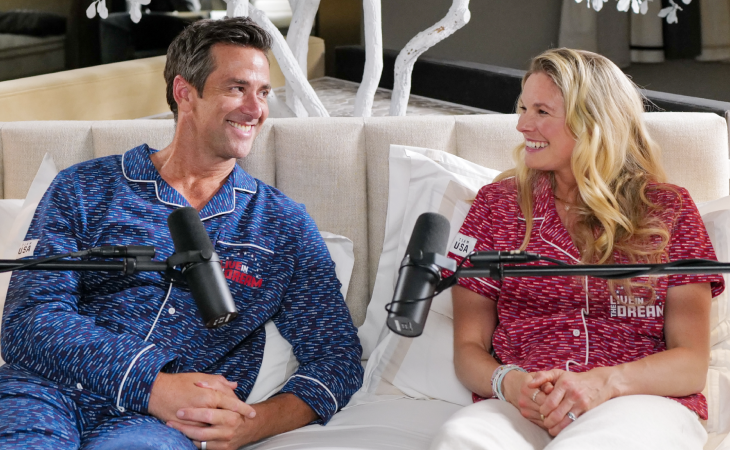
Welcome to Superpower, the podcast about how sleep, recovery, and mental resilience drive peak performance. In this episode, Jessie Diggins, three-time Olympic medalist and the most decorated American cross-country skier in history, talks about sleep, mental health, and pushing through the “pain cave” to find joy.
You can listen to this episode on Spotify or Apple Podcasts or watch the episode below.
Superpower podcast with Jessie Diggins: transcript
Introduction
Dave Briggs: Ever wonder what the difference is between a good athlete and an Olympic athlete? Well, for today’s guest, it’s actually the ability to suffer. Welcome to The Superpower Bedcast. I’m Dave Briggs, and I’m talking about Jessie Diggins. She’s the most decorated cross-country skier in U.S. Olympic history. But this is not an episode about skiing downhill or otherwise. It’s about the grind. How Jessie powers through what she calls the “pain cave,” and what we can all learn from that, no matter what we do. It’s how she got through an eating disorder. She also tells us why cross-country skiing might be the perfect sport for Snoop. But for Jessie, it all starts with a good night’s rest. Turning off that iPhone and sleeping in what she calls the “bat cave.” Here’s our conversation with world-class sufferer, Jessie Diggins.
Sleep, recovery, and the “bat cave”
DB: We’re going to start with sleep. You train so hard, you compete so hard, we’ve seen you collapse on the finish line. Is that what happens at the end of a long day when you hit this mattress?
Jessie Diggins: Pretty much, yeah. It’s funny because I think people think that the crazy superpower is in pushing yourself so hard—and yes, that takes willpower and dedication. But I think also, the dedication to taking care of myself is equally as important. And if I don’t take care of that rest time, if I don’t carve out the time to rest and rebuild and relax and let my body restore itself, then I can’t go out there and push hard. You can’t have one without the other, and sleep is the part that restores the balance.
DB: It seems like you do everything full-on. Do you sleep hard?
JD: I do. Sometimes I wake up and literally nothing has moved, you know? And then other times, active sleeper. But yeah, I tend to sleep eight to nine hours a night, and sometimes more in the winter.
DB: That’s impressive. Is there a routine? Do you have a scent that you put on the pillow, a mask you put on? What’s the environment like? Give us your sleep story.
JD: Okay, well, I like to call my bedroom the little “bat cave” because I like it dark and cold. I mean, it doesn’t look like a bat cave, it looks beautiful.
DB: Thank you, that image was—so, cold and dark.
JD: Cold and dark.
DB: Blackout shades?
JD: Blackout shades over blinds, so we’re like double dark—really doubling down on the darkness here. And I like to try to keep my phone, it goes on Do Not Disturb at 9, and then that’s it.
DB: At 9?
JD: At 9 o’clock. Nothing happens after 9.
DB: Every night?
JD: Every night, I set it and then forget about it. So if there’s a change to the team training plan, and at 9:01 they’re like, “Hey, we’re going to do this,” I’m like, I won’t see this until tomorrow morning. That’s it, I’m out. I try to really relax and unwind and I really like to read in bed.
DB: So no doomscrolling?
JD: No doomscrolling. No, the phone, in fact, I just got an alarm clock that doesn’t have—well, most alarm clocks now, they’re backlit and they just glow incessantly, you know what I’m talking about?
DB: I hate that.
JB: It drives me nuts because I’m really sensitive to light, so I got one that’s just dark. And so now, the phone is not even in the bedroom at all, the phone’s just out. The phone’s not there at all, so you cannot doomscroll.
DB: Wow, you don’t mess around.
JD: No, no, I’m really serious about sleep.
DB: The bat cave is hardcore.
JD: The bat cave is hardcore. It’s not the pain cave, it’s the bat cave. It’s my time to rest and relax. But I will literally sometimes read for an hour.
DB: What are you reading?
JD: Oh, what am I reading right now? I was really into the Fourth Wing series for a little while, which I’m kind of embarrassed but not really. And then I just got given a book as a gift: What Made Maddie Run. And it’s about mental health. It’s a little bit of a sad story, but I think it’s really important to read and understand. I kind of balance out a little more serious with very lighthearted not at all serious.
What happens without sleep
DB: So what happens if you don’t get that eight or nine? How does it impact your recovery?
JD: Oh, well, it impacts my quality of life because I’m just not that fun to be around. Because I’m used to functioning on a lot of sleep because it is part of my job as well.
DB: And you view sleep as part of your job?
JD: Well, to be fair, I view sleep as my me time, so I think even when I’m not skiing—even when it isn’t actually my job to recover—I’m still going to be a little sleep monster. I’m still going to be wanting those eight hours every night because I just love how I feel when I’m rested. Because for sure it impacts how I can ski. When I get those eight or nine hours, I wake up and I’m like, okay, let’s go, and I’m hitting hard training sessions. I’m training twice a day, six days a week—it’s a ton of volume. And so, I need that time for my body to rebuild or else I can’t go out there and do my job day after day. Honestly, I want to get that much sleep forever because I focus better. I’m a better human when I’m rested.
DB: I’m a monster when I don’t get my eight hours. Just ask my wife. You live here in Boston, you live in Vermont, you travel around the world. How do you maintain that type of bat cave and consistent environment across all those different atmospheres?
JD: That is a really big challenge.
DB: And time zones, I guess?
JD: And time zones, that’s really hard. I would love to be able to bring the whole bed with me, but I can’t—and so, I do travel with my own pillow. I make space in my bag for a pillow, and that’s really, really important because then my neck is at the same height. Even if I’m in a different bed every single week, at least my neck isn’t here one week and here the other week. It stays stable. And then it’s also really important that I have earbuds so I have the same sound in my ears.
DB: Wait, you sleep with earbuds?
JD: I sleep with earbuds. Not like AirPods or something, but ones that are actually meant to—you can lay on your side and it won’t dig into your ear.
DB: Damn, you don’t mess around.
JD: No, I really don’t.
DB: They’re just to cut out all the noise, or there’s sound going through them?
JD: There’s sound. And so, I used to sleep with earplugs, and then I realized that sometimes we’re in hotels that are really loud and noisy. So when we’re competing in the Tour de Ski in Italy, it’s during their main holiday, and so we’re trying to go to sleep, and Italians they stay up later. And so I’m in bed at 9:30, I have a World Cup race the next day, it’s the Tour de Ski, and there are children running up the hall ding dong ditching people. And so, I’m like, oh, this is not going to work for me. So I invested in a pair of earbuds, and so now all I hear is rain powering, and it’s so peaceful and it masks any sounds of what’s going on in the room next to me or down the hall. And then I have an eye mask, so if there aren’t good shades, it’s dark, I hear the same sound, and I have the same pillow everywhere I go, and then that keeps it consistent.
Napping and reset time
DB: You are an absolute pro. Wow. Okay, are you a napper? Tara Lipinski just told us her bucket list, her dream, is to someday nap. She cannot nap.
JD: Oh, man.
DB: Always got that, gotta be—. Can you nap? Because you seem like, no way.
JD: It’s funny, because when I was a kid, I could never nap. You know how in preschool there’s a nap time, and everybody lays down and naps? I could not do it. I was doing gymnastics on the mat. The rule was you had to stay on your mat, and so I was doing handstands, headstands, all this stuff, and they were like, “Wow, this kid is a piece of work.” But now I’m really into napping. Here’s the thing: I don’t always actually sleep. But it’s my reset time, and I found that I perform better in training but also I live better when I give myself 15 minutes. And so again, no phone, no doomscrolling. I’m not even reading, I just lay down, and I snuggle in under the covers, and I shut my eyes, and I’ve got minimum 15 minutes. And if it’s not happening, then I’m like, alright, at least I’ve got quiet time to myself to let myself kind of melt a little bit. And then I wake up and I’m way more focused on the tasks that I was trying to do—the emails I’m trying to respond to, getting ready for training. But sometimes, what I’ll do is, I’ll get in bed and I’ll give myself a 45-minute block. And sometimes I end up waking up to my alarm, like, oh my gosh, this is the next day, I don’t know where I am. And so I end up having this hard sleep because I’ve tried to let myself relax. I think some of it is the habit—now I look forward to it, it’s a treat to snuggle up in bed and just not have to do anything. It feels like a serious luxury, you know—oh, I don’t have to be accountable to anyone for 15 minutes. It’s just for me, and it’s really nice.
Eating disorder, control, and mental health
DB: Nothing like a nice nap. With this type of drive and seeking perfection, sometimes can come with it significant challenges. And for you, that was probably the eating disorder that you developed along the way. Looking back on it, what do you think led you to this eating disorder? I’m far too familiar with bulimia, having dealt with it in my own family for too many years. What do you think led you down that road?
JD: So many different things. One thing that I learned from my time at the Emily Program, which is a treatment place for eating disorders that I went to when I was 18 and they saved my life. And I’ve learned that one, it’s not a behavioral choice. And I think that was a huge thing that, it’s a stigma around eating disorders that creates a lot of shame and guilt. And I thought, oh my gosh, I must be such a bad kid. And I was definitely trying to be perfect in everything that I did. And then when I started to struggle with disordered eating behaviors—even though I wasn’t clinically diagnosable with an eating disorder, I was struggling with those behaviors—but I was like, oh, I can’t talk about it or talk to anyone because of that shame and guilt. Because it seemed to be a behavior choice, not an actual mental illness.
DB: Was it seeking control, someone who was in a sense a perfectionist?
JD: Yeah, so for me, my eating disorder—and again, this is another sort of eating disorder myth, everyone thinks it’s about food or how you look—but really, for me, it was about control, and perfectionism, and really struggling with the pressure I was placing on myself to be so perfect in everything that I did because many people who suffer from eating disorders are very Type A, very driven, get good grades, they’re very focused, they try really hard at everything they do, which is often why it’s very surprising to their family members. Like, “Oh my gosh, my daughter’s crushing it in school, what is going on? She seems like such a happy go-getter.” And I know for my parents, that was really confusing—like, what is happening here? But the eating disorder kind of serves as a crutch when you’re struggling to deal with such intense pressure that you’re placing on yourself. And when you feel like you can’t control all these things going on in your life, you want to just cling to control of food and body as the one thing, especially if you’re young. You can’t drive, you don’t know if colleges are going to accept you, you’re putting a lot of pressure on yourself. There are so many things in the world that are out of your control. And it can seem like, what if I could just hold on a little tighter to this one thing.
DB: That makes far too much sense for me. It hits very close to home. What do you think helped you get through it that maybe others could learn?
JD: Well, one, I really wish that it was easier to talk about back then. Mental health in general was so stigmatized, which is why I think it’s so good to talk about now. Because it shouldn’t be this super shameful guilty secret. My analogy is, if I fall on the sidewalk and I break my arm, I’m not going to go home and be like, oh my gosh, I can’t tell anyone. I could never go to the doctor. I’ll heal it myself. I would never—no, of course, I would go seek medical, professional help from someone who is trained so that they can help me heal. And the same thing should hold true for really any mental health crisis that someone is going through, anything. There are people who have trained for years to be able to help you through this, and we should allow ourselves to feel like we are worthy of that help. I phrase it that way because I think it’s not just about asking for help, although that’s hard, but sometimes we start to believe that we either aren’t sick enough to deserve help, or maybe I’m not worthy of that help, or oh my gosh, I don’t want to bother anyone. But it was phrased to me recently—and I love this—when you allow people who love you into your life, you’re giving them the gift of being part of your story. And so, whether or not you need help trying to win a ski race—I think of all the people who were part of my story, and when I got to bring those medals back from the Olympics, those medals belonged to 10,000 people. And they know it. They’re part of that because they’re part of my journey, they have helped me. There are so many people who own a piece of that—and likewise, in eating disorder recovery, I’m opening myself up to people who really care about me, who are there for me, and they’re able to be like, “Hey, I love you, let me take care of you. Let me help you and let me be there for you.” Because I think about the way I feel about people I love—oh my gosh, let me make you feel good, let me write you a nice birthday card, let me do little things for you that make you happy. I love that. And so, we need to allow other people to do the same for us.
Keeping girls in sports
DB: That’s incredible. And we should also keep girls in sports. Unfortunately, they are dropping off a cliff. Between 40 and 60 percent quit competitive sports after elementary and then after middle school. And I know that’s something you’re passionate about. Why is that, and how do we reverse that?
JD: We tend to lose girls from sport at a time when your body is changing, and that’s really scary, and you’re trying to figure out where you fit in. And so if we can create a space where it’s like, no, you belong in here, you fit in, it doesn’t matter what ability, how fast, how slow, it’s just about going out there, being part of a team and part of a group and doing the best that you can and seeing the value in being part of a team, not just the value in winning. And I think it’s really about where we place that value, where we show young women, we value your ethics in sport, we value integrity, we value hard work, we value showing commitment and coming to practice everyday and being there to support the team. It’s not just we value you only if you win. And I think that’s an important message.
The pain cave and suffering in sport
DB: Hopefully more role models like you will help. The United States Olympic Committee, the U.S. Olympic movement is better that you stayed in sports and won three Olympic medals—and I always go back to the moment at which you collapsed on the finish line. You’ve talked about the word suffer and suffering throughout these interviews as a strength. Tell me about what that word means to you.
JD: Yeah, well, so there’s this thing in endurance sports where we call it the “pain cave,” and it’s sort of this metaphorical place that you go to in your mind when your body is really sending you all those signals. So you imagine if you went out the door and you just started running as hard as you could.
DB: Okay.
JD: Okay. You’re just running as hard as you can. Pretty soon, you’re going to feel the burn in your lungs, you’re going to feel the muscles getting really tight, you’re going to feel the lactic acid accumulating, you’re going to feel after a while like your brain is sending you all these signals, like, dude, slow down. It’s too much, shut it down, shut it down, it hurts. Everyone can be familiar with that feeling. And so the pain cave is basically where you go to in your mind to deal with that suffering. And I used to think it was all about delaying—delay the suffering, delay it, wait as long as you can in the race until you get to that point in which you’re basically tasting the copper pennies in the back of your throat. But then at some point, I had a race where I just pushed through it because I was trying to race really fast in a relay for my high school team, and I got across the finish line and I thought I was going to die. I was like this is it, at least I went out doing what I love. And then, I didn’t die. And after 30 seconds I got up off the snow, and I was like, oh my gosh, I just unlocked something. I realized that I can suffer so much in a race and go fast and hit that next level, unlock that whole next level of racing, and it doesn’t last forever. It truly is this temporary thing. And I should say, pain and suffering in a race, that’s separate from injury, right? Injury pain, totally different deal—have to respond accordingly. But that’s not what we’re talking about here. We’re talking about the long burn of pushing hard in a race. And I guess I just figured out how to shake hands with pain and how to greet that pain as a sensation of, I’m doing it, I’ve arrived. Instead of, like, oh no, I can’t believe I’m feeling like this, this is awful, it’s like, no, I asked for this. This is the sign that when I cross that finish line, I will know I’ve left it all out there and I won’t have any what-ifs, I’ll have no regrets, no questions. In my mind, I’m like, if I am able to suffer that much in a race, I will never have to suffer after the race with what-ifs or regrets.
DB: On the other side of the pain cave is joy?
JD: Pretty much, yeah. And I think there’s this really interesting relationship where, when I truly feel joyful in my everyday life—which at baseline I’m a pretty happy person, so that’s not too hard to achieve—but when things are going great in my everyday life and I’m relaxed and I’m happy and I’m smiling at the start of a race and I’ve got my sparkles on and the whole thing, it is easier to suffer more in the race because I feel like there has to be this balance. And I’ve found that when something’s going on in my everyday life or whatever and I’m already in pain, like mentally or physically, maybe I’ve got an injury, you know—like last winter, I had a foot injury that was kind of crazy that I was working through—it’s like your bucket’s already half full. There’s only so much room. And so, I find that the more joy I have in life, the more pain I can bring willingly to the race.
Sparkles and joy
DB: That is truly remarkable. Tell people about the sparkles. Why?
JD: Oh yeah, well, it started a really long time ago. But I used to get so nervous for races when I was in high school, and it was almost to a point where it was taking all my energy. It was too much, I was too nervous. And so, I started needing to have more fun with it and to remind myself: I love this, I truly love what I do, I love cross-country skiing, I love racing and being part of a team. And I’m here because of that joy. And so, the sparkles are this promise to myself and a reminder, this should be fun. Because it’s really hard to take yourself too seriously if you’re rocking sparkles all over your face.
DB: We really should have had some here today. I should’ve thought of that.
JD: Well, it’s okay because this isn’t a race. I tend to, yeah, the sparkles kind of just became this thing. And it’s so fun to share it with people. I love it when people share pictures with me of them putting on glitter before a race. Like hey, I went out there and I had fun and I remembered to smile and I remembered to enjoy it and I remembered when I was nervous, like, oh, I chose to be here. That’s kind of what the sparkles represent.
Olympic gold and team victory
DB: Alright, we talked a lot about the pain. But what was the joy of winning the first-ever gold medal for your country in your sport. I mean, just representing your country is probably joy enough. But taking that to the next level and winning that gold medal, the first-ever in your sport—what was that joy like?
JD: Oh, it was the best feeling because we did it as a team. So this was in the team sprint, and my team sprint partner was Kikkan Randall, and she’s been a longtime teammate of mine. She’s retired now, but like a big sister. And so getting to do it with someone that you feel like is part of your family, your ski family, that was so special—and I’m going to get emotional because I still remember the feeling of getting up from the snow with Kikkan, and we turned, and the whole team was lined up right alongside the finish line. They were all in their blue jackets, and coaches were sobbing. And seeing the coaches crying, and people were screaming, just seeing what it meant to the whole team. Because truly, we didn’t, it wasn’t like, I would never say I won a medal, it was “we won a medal.” I think I could fairly speak for Kikkan when she would also say, no, we didn’t win that medal, it was “we,” the big capital “We,” the team, so many people were part of that. And it was so cool to share with them. It was definitely one of the most special and emotional moments of my career.
Inspiration, legacy, and growing the sport
DB: And that journey and that victory have helped you accumulate an astounding 243,000 Instagram followers. I know that is less an achievement than the medal, but have you made cross-country skiing cool? You must see young girls that want to compete in the sport because of you?
JD: I mean, one of the coolest things to me was seeing the huge ripple effects of that moment because so many—so I grew up learning how to ski through the Minnesota Youth Ski League, and so many chapters of it opened after. I think they added eight chapters in the state. It was so cool then hearing from parents, like, “oh yeah, I dug the skis at the of the basement and we got going and we went to the local park and we had so much fun.” For me, it’s been so cool seeing the sport grow because I want people to be able to enjoy it when it snows. Instead of when people are like, oh, I can’t believe it’s cold, it snowed, it’s like, no, get out there, build a snowman, go sledding, go for a hike, go skiing, go to a local park, take a lesson, sign your kids up. I want people to go out there and experience the sport truly because it’s brought so many amazing things to my life, and the people in this community are outstanding. Just the most amazing people are a part of this cross-country ski community. So I want people to be part of that, and I want them to go try it. And I think the Winter Olympics is so cool because it brings so many sports that maybe you would’ve never seen or heard of or participated in—it brings that to the world and it gives people a chance to be like, oh, that’s really neat, I’m going to go try that.
Retirement and what’s next
DB: There have been whispers of this word retirement, and looking at you, it’s just a weird word to hear thrown around with someone so young and full of energy and youth. Is retirement near, in terms of the sport?
JD: Ah, you know, I’m just so focused on this Olympics, and when I have decided, and when I am ready, I promise, I’ll tell you. I promise, you will all know.
DB: I’ll be the first one.
JD: You’ll be the first one. I promise, I won’t just fade off into the sunset. You will all know because this sport has been so incredible to me, and it has given me so much, and I want to tell people. But when I’ve 100 percent decided, because it’s a big decision, and I love what I do.
DB: Well, I feel like you could just compete in a different sport. Maybe you could run. I hear that could be—?
JD: I actually do love trail running.
DB: Right?
JD: I will say, I’m not very fast, but I love being out there in the mountains, I love long runs, and it’s been such a joyful thing for me. And luckily, it’s part of our training, which is so cool, because we get to switch up the sports we do. So we do a lot of roller skiing to train when we don’t have snow. We also do a lot of running, and I just love going out there in the mountains for hours. So, yeah.
DB: You’ll never retire, you’ll just switch sports, I would assume.
JD: Exactly.
Favorite music and TV shows
DB: Alright, we’re almost done. We just gotta give people a little better picture of, complete the details. So, are you a Swiftie?
JD: Oh, yes.
DB: Okay, so what do you make of the new, The Life of a Showgirl, out today?
JD: The Life of a Showgirl. Okay, so I spent a lot of time today listening to it.
DB: Your review?
JD: Big fan. Big fan.
DB: I enjoyed it too. I listened to the entire album. I’m a bit of a Swiftie.
JD: Yeah. Actually, it’s perfect fall vibes. Driving through the leaves.
DB: Do you admire the tour de force that she is? Not just the performer, but the human being and the businessman?
JD: I do. I think it’s really incredible, to be honest, because also, think about the variety of her albums. She has reinvented herself and allowed herself to grow and stretched herself in so many different ways. And I think sometimes we tend to put people in a little box, like, you are good at this one thing and this is the thing you do, and she’s like, now watch this. I’ve got all these things that I’m interested in, all these different sounds—
DB: Maybe the best marketer of all time.
JD: It’s incredible.
DB: Let alone the performing, let alone the writing. She’s probably the best at all of those disciplines.
JD: Yeah, I’m a huge fan.
DB: Favorite song?
JD: From the new album?
DB: At all.
JD: Oh, at all?
DB: One Taylor Swift song.
JD: What?
DB: You don’t have one? That too hard?
JD: That’s really hard. I would say “Style.” That was one of my favorite ones.
DB: That’s a fair answer. What’s on your playlist when you are competing, though?
JD: Well, so here’s the interesting thing: We are not allowed to compete with headphones. So it’s just you out there.
DB: Just that voice in your head, huh?
JD: It’s the voice in your head, so you have to self-talk yourself through the race. A lot of pep talks internally. So we—
DB: If you were able to listen to music, what would be playing?
JD: If I were—oh my gosh. Taylor Swift would make the cut. Yeah, maybe a little “Pink Pony Club.”
DB: “Pink Pony Club?” I don’t know them. I’ll check it out.
JD: Well, that’s the name of the song.
DB: Oh, that’s the song.
JD: Oh my gosh, who sings it. Now I’m having a mind meltdown.
DB: That’s okay.
JD: Yeah, it would be a really peppy thing.
DB: Alright, what was the last show you binged or what are you streaming right now?
JD: Okay, we were watching Shrinking at our last camp. So good.
DB: Oh my god, I knew I liked you.
JD: Huge Harrison Ford fan.
DB: Listen, it’s the greatest show of all time.
JD: I would also say, though, Ted Lasso. Ted Lasso is my number one.
DB: Might be number two to me.
JD: Yeah.
DB: Oh wow, one and two. I agree with you.
JD: Ted Lasso‘s one. Shrinking might be two.
DB: What are you ChatGPTing? Do you use AI?
JD: Oh my gosh. What was the last thing I ChatGPTed? It was something very random.
DB: Oh, so it’s not a regular thing for you.
JD: No.
DB: Okay.
JD: No, no.
DB: Several times a day for me.
JD: This is going to sound really dumb. I don’t like to use it because I’m worried that I’ll get too reliant on it.
DB: Yeah.
JD: I scare myself.
DB: That is very true.
JD: Yeah.
DB: Alright, first app you check in the morning, last app you check at night.
JD: Oh, that’s easy. It’s text messages because I wake up to a text from my husband pretty much every morning.
DB: You do? Every morning?
JD: Yeah, because he’s up before me and on his way to work. And so, that’s the first thing I do. I text him or he texts me.
DB: What a good dude. Man, that makes me feel like a bum. I need to start stepping up. That’s a great gesture that he does that. Alright, we’re going to have to put his earmuffs on for this one. If there was one celebrity you’d prefer take my place, who is it?
JD: Taylor Swift.
DB: Oh, is that right?
JD: Obviously.
DB: I was going, like—
JD: I have so many questions for her.
DB: What? What questions?
JD: Oh, she’s a marketing genius, for one, and I want to know if she would like to come skiing with me one day. And then, yeah, I want to know all about her process of songwriting.
DB: I would love to sit down with Taylor Swift in bed. You have earned your next gold. Thank you.
JD: No way.
DB: I know it’s an honor, right?
JD: Thank you.
DB: It’s just like the gold medal.
JD: I will treasure this forever.
In closing
DB: Thank you for being in bed with us. This was terrific.
JD: Thanks for having me.

Saatva Editorial Team
The Saatva Editorial Team is comprised of writers and editors who specialize in creating content about mattresses, bedding, and sleep.
Related Stories
Table of Contents
