
 Does Milk Thistle Help You Sleep Better?
November 29, 2019, updated on October 20, 2026
How Much Sleep Your Child Needs, According to Their Age
Written by Shelby Deering
Key Takeaways
Daily recommended sleep transitions from up to 16 hours for infants down to 8 to 10 hours for teenagers as physical and cognitive development matures.
Adequate sleep is essential for growth hormone release, immune function, mood regulation, and academic performance across all developmental stages.
Maintaining regular schedules, establishing quiet bedtime routines, and limiting evening screen time are key factors in helping children achieve restful sleep.
How much sleep do kids need? From infants requiring up to 14 hours to teenagers needing around nine, child sleep needs evolve significantly at every stage of physical and cognitive development. According to pediatric experts, getting age-appropriate, high-quality sleep is critical for releasing growth hormones, strengthening immune function, and boosting school performance. This comprehensive guide breaks down recommended sleep hours, nap schedules, and expert sleep hygiene tips for every child development stage—from babies to teens.
As adults, we know how easily sleep can evade us. Between busy schedules, busier minds, and other factors ranging from back pain to insomnia, a high-quality night’s sleep is something that takes conscious effort.
Now imagine that you’re a child trying to get a good night’s rest. Children’s bodies and sleep needs might differ from ours, but they deal with similar hurdles like homework stress and growing pains. And quality sleep is just as important for children as it is for adults—if not more so.
“Overall, sleep is a necessity for normal childhood development,” says Ashanti Woods, MD, a pediatrician at Mercy Medical Center in Baltimore. “In addition to important hormones and proteins being released during sleep—like growth hormone, which helps a child get bigger, or cytokines, which help a child’s immune system—adequate sleep has been shown to lead to better attention span, weight control, and injury reduction because they are less clumsy.”
Each age group has its own unique set of sleep needs. To help your kids achieve optimal sleep, it’s important to understand what’s going on in their bodies at every age. That way you can develop an approach that ensures the best sleep at each stage.
We’ve broken down these child development stages, from babyhood through their teen years. Here’s how much sleep kids need, according to their age.
| Age Group | Recommended Sleep (24h) | Nap Schedule | Key Focus / Sleep Hygiene |
|---|---|---|---|
| Infants (4–12 mos) | 12 to 16 hours | 2–3 daytime naps | Crucial for early cognitive development & hormone release; consistent bedtime routines. |
| Toddlers (1–2 yrs) | 11 to 14 hours | 1–2 daytime naps | Supports physical growth & immunity; maintain structured nap timings. |
| Preschoolers (3–5 yrs) | 10 to 13 hours | 0–1 afternoon nap | Transitioning away from naps; limit screen time before bed to prevent bedtime resistance. |
| School-Age (6–12 yrs) | 9 to 12 hours | No naps | Boosts academic performance, memory retention, and emotional regulation. |
How it works
Child sleep requirements change as children grow because their brains and bodies undergo rapid biological transformation. During deep sleep stages, the brain releases essential growth hormones that drive physical development, bone growth, and tissue repair.
At the same time, sleep acts as an active recovery period for the brain. It consolidates daily memories, processes learning, and strengthens neural pathways necessary for cognitive development. As children transition from infancy through adolescence, their circadian rhythms naturally shift, altering both the required duration of sleep and daytime nap frequency to match their stage of maturation.
Pros and cons of age-appropriate sleep schedules
Pros
- Enhanced cognitive growth and learning: Consistent, recommended sleep improves focus, memory retention, and overall academic performance in school.
- Stronger immune system and physical growth: Sufficient sleep allows optimal release of growth hormones and strengthens immune defenses against common illnesses.
- Better emotional regulation: Well-rested children experience fewer mood swings, tantrums, and behavior issues throughout the day.
Cons
- Rigid schedules can limit flexibility: Maintaining strict bedtimes and nap schedules can make family travel, social events, and evening outings challenging.
- Requires consistent effort: Enforcing sleep hygiene, especially limiting screen time with teenagers, requires ongoing parental boundary setting.
- Transition phases can cause temporary disruption: Dropping daytime naps or adjusting to new school start times can cause temporary overtiredness and resistance.
Who it is for
- Parents and caregivers: Looking for clear, age-specific guidelines to build healthy sleep routines for babies, toddlers, children, or teenagers.
- Pediatricians and family health educators: Seeking a concise summary of sleep recommendations to share during checkups and health consultations.
- Teachers and school counselors: Wanting to understand how sleep deprivation impacts student behavior, focus, and academic achievement in the classroom.
Sleep needs of babies
Between the ages of four months and one year, a lot is going on in a baby’s body.
“Their bodies are growing, their brains are growing, and routine is essential,” Woods says. The ideal amount of sleep for an infant is 14 hours per day, including two to three naps.
When little ones do awake from sleep, it’s crucial to keep activity to a minimum. “Babies at this age may wake up in the middle of the night, but only for a brief period of time,” says Woods. “The goal should be to keep middle-of-the-night feedings, if necessary, as short and as boring as possible.”
Related: Sleep tips from the “Baby Sleep Boss”
Sleep needs of toddlers
The toddler years start at just one to two years old. All that sleep your toddler got as a baby has led to leaps and bounds in brain development and bodies that can move more easily. They’re beginning to form full sentences and starting to run and play simple games. The rate of physical growth slows down for the first time since they were infants.
With that slowdown comes less sleep. Woods says that 12 hours of sleep per day is excellent for this age group, with two naps.
You can also begin to work on sleep routines with your child at this age. “Establishing a practical bedtime routine early in life is essential to sustained sleep hygiene,” Woods notes, and it’s never too early to start.
Consider instituting a bedtime checklist with your child, which can include dimming the lights to signal that it’s time to go to sleep, allowing your child to make small choices, such as which pajamas to wear, and reading a story.
Our best mattresses for babies and children
This carousel automatically rotates through products. Use the pause button to stop rotation, or use the slide dots to navigate.
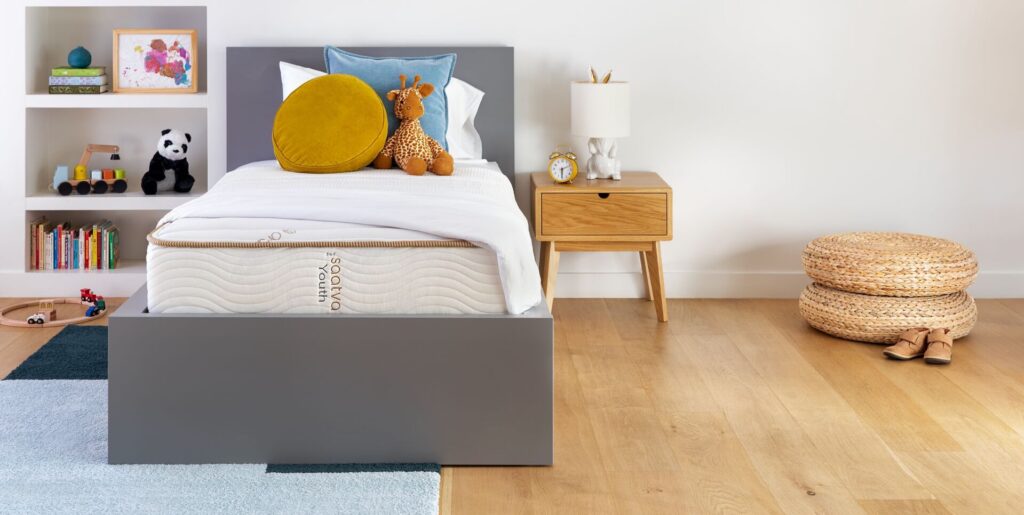
This dual-sided crib mattress is designed with the unique sleep needs of babies and toddlers in mind. Handcrafted with a hypoallergenic cover made with organic cotton, GOTS® certified organic wool, and recycled steel coils. This dual-sided innerspring mattress provides optimal support and comfort to children of all ages. Simply flip it over from the 3+ side to the 8+ side when your child is ready.
 Crib Mattress
Shop Now
 Youth Mattress
Shop Now
Sleep needs of 3- to 5-year-olds
When your child is three to five years old, they may be entering preschool or kindergarten. “Big kid beds” are an equally big deal, and it may be time to consider a new mattress that fits the needs of your child.
Your child is starting to do other big kid things too, like climbing, jumping, and additional physical activities. They’ll add a few inches to their height and a bit more weight as well.
As children begin school, high-quality sleep becomes even more necessary. Although they may not need regular naps anymore, as Woods explains, nightly sleep can impact their problem-solving skills, language development, and attention, all things that are important for school-age children.
Woods advises 10 hours of sleep for this age group, and this can include an optional nap. “If the child does not take a nap, some dedicated quiet time near the middle of the day is usually very helpful,” he says.
Sleep needs of 6- to 12-year-olds
By the time your child is six to 12 years old, they’re in the full swing of school. Their mental skills have developed, and they require more activity to gain the benefits of exercise (the recommended amount is one hour per day).
Naps aren’t typically part of the daily routines of children in this age group. With one optional nap, Woods says that children at this stage should aim for nine to 10 hours of sleep every night.
Within this age group, children may begin to show more pronounced symptoms of sleep deprivation, including hyperactivity, being slow to wake in the morning, and disruptive behavior. Sleep will aid your children as they navigate their school days, and this is when the bedtime routine you’ve put into place will become even more key.
As Woods says, “Sleep leads to better communication skills. Children who are well-rested typically are less cranky, more thoughtful, more creative, and exercise better social skills than children who are not well-rested.”
Sleep needs of teenagers
At 13 to 18 years old, your child’s sleep needs will closely resemble that of an adult. Woods recommends nine hours of sleep daily for teenagers, and this can include an optional 30-minute to one-hour nap.
Growth has slowed substantially, and your kids are likely beginning to or are already deciding when they go to sleep and when they wake up. With this newfound independence, sleep hygiene might be low on their lists.
“Given the early start times of many high schools, teenagers, who are usually the ones in charge of when they go to sleep, need to take into account what time they have to wake up to get ready for school—and still aim for getting nine hours of sleep. This will in many cases mean a 9 p.m. to 10 p.m. bedtime,” Woods says.
This is an ideal time for teens to go to bed, but Woods adds that this isn’t often what happens in real life. “In reality, many teenagers go to sleep around 11 p.m. or midnight and sometimes the early hours of the morning, which puts them at increased risk for less than optimal performance when in school,” he says.
If your teen is driving, that’s another risk that can be made even riskier due to poor sleep. “A teenager who is not well-rested but who has a license to drive can be a danger to him or herself and others while on the road,” notes Woods. That’s when a parent’s words of wisdom regarding sleep can be helpful.
And you’ll be happy to know that good sleep habits in childhood can translate to good sleep habits as adults. “It is our duty as parents, teachers, and health providers to emphasize the importance of adequate sleep,” says Woods, “and to encourage and applaud our young adults when they are practicing good sleep hygiene.”
FAQs
How can parents tell if a child is getting enough sleep?
Signs of adequate sleep include falling asleep within 15 to 30 minutes of going to bed, waking up naturally near their normal wakeup time, and maintaining consistent energy levels throughout the day. Conversely, children who are sleep-deprived often show daytime drowsiness, increased irritability, difficulty focusing at school, or hyperactive behavior.
What should parents do if a toddler refuses to go to sleep?
Establish a predictable, calming bedtime routine lasting 20 to 30 minutes that includes quiet activities such as reading a book or taking a warm bath. Keep the bedroom environment dark, quiet, and cool. Ensure screen time ends at least one hour before bed, and maintain consistent sleep and wake times every day, including on weekends.
How does screen time affect child sleep quality?
Screens emit blue light that suppresses the body’s natural production of melatonin, the hormone responsible for signaling sleepiness. Additionally, interactive content like video games or social media keeps the nervous system stimulated, making it harder for children and teenagers to unwind and fall asleep.
Is it normal for teenagers to stay up late and struggle to wake up early?
Yes. During puberty, teenagers experience a natural biological shift in their circadian rhythm known as a sleep phase delay. Their bodies begin releasing melatonin up to two hours later in the evening than adults or younger children, naturally pushing their sleepiness back until later at night.
When should parents consult a doctor about child sleep problems?
Parents should speak with a pediatrician if a child consistently takes more than an hour to fall asleep, wakes up frequently during the night, snores loudly, breathes through their mouth while sleeping, or experiences daytime sleepiness that interferes with school or daily activities.

Shelby Deering
Shelby Deering is a Madison, Wisconsin-based freelance lifestyle writer contributing home design and health articles to national publications. When she’s not writing, you’ll find her hiking, running, or walking with her husband and corgi, Dolly.
Related Stories
-
Does Milk Thistle Help You Sleep Better?
-
 Can Psyllium Husk Help You Sleep Better?
-
 Is 7 Hours of Sleep Enough?
Table of Contents
