
 Best Cyber Monday Bedding, Pajamas, and Tech Deals of 2025
Bedding, Blankets, Comforters & Duvets
December 18, 2025
Tips and Tricks for Putting a Comforter in a Duvet Cover
Written by Shelby Deering

Putting a comforter into a duvet cover is easy with the right technique. Interior designers recommend two methods: the traditional shake method and the “burrito roll” technique. Using corner ties or clips prevents shifting, while regular washing, air drying, and proper storage keep your bedding fresh and smooth.
If you’ve ever owned a duvet cover, you know this to be true: putting it on can be one of the most challenging aspects of making a bed.
“Putting on a duvet cover can be tricky because you are trying to wrangle a heavy blanket into what is basically an oversized pillowcase,” agrees Lauren Saab, founder and principal Designer of Saab Studios. “The fabric bunches, it twists, the corners disappear, and before long, you are tangled up in the whole thing.”
The good news? The right technique can turn a dreaded chore into something simple, says Saab.
Ahead, we’ll go over two tried-and-true methods of putting a comforter in a duvet cover.

Introduction to comforters and duvet covers
First things first: A comforter is a standalone quilted blanket that’s filled with down, feathers, or synthetic fibers and is stitched all over to keep the filling evenly distributed, explains Saab. “It doesn’t need a separate cover, and you can use it as is,” she adds.
A duvet cover, meanwhile is “basically a giant pillowcase for your duvet insert or comforter, and it closes with buttons, ties, or a zipper, which can easily be removed for washing or swapped for a new look,” says Saab.
The biggest difference is that comforters are one piece while a duvet cover needs an insert, she notes. (Learn more about comforters vs. duvets vs. duvet covers.)
Preparations before inserting a comforter
There are some things you can do before attempting to put your comforter into a duvet cover.
For starters, make sure you’ve chosen the correct size. There’s nothing worse than unraveling a large comforter just to realize it won’t fit properly within your duvet cover, says Saab.
Next, wash and dry your duvet cover according to the manufacturer’s instructions. “Once washed, it’s easier to work with and ensures freshness,” says Saab.
How to put a comforter in a duvet cover: step-by-step instructions
You might be wondering how to put on a duvet cover in seconds instead of wrestling with it for several minutes. Here, we’ll go over the two most popular methods for placing a comforter within a duvet cover.
Technique #1: the traditional way
While the traditional method for putting a comforter in a duvet cover is simple to follow, it “can become clumsy,” cautions Saab.
She shares the steps below:
- Turn the cover inside out.
- Grab the far corners of both the cover and the comforter together.
- Pull the far corners through the opening.
- Give it a good shake to smooth things out.
“Gravity does the heavy lifting here, and when all the corners are aligned, the insert naturally slides into place,” says Saab.
Technique #2: the burrito roll
“The ‘burrito roll’ is a popular hack because it makes putting on a duvet cover much easier,” says Saab.
Here are the steps, according to Saab:
- Turn the cover inside out.
- Lay the comforter on top.
- Roll the comforter and duvet cover up together from the top of the bed to the bottom, like a burrito.
- Tuck the rolled ends into the cover’s opening.
- Unroll it back up the bed.
“When you’re done, the comforter is neatly inside with no twisting or bunching,” says Saab.
Tips and tricks for ease and efficiency
Saab has a few additional tips and tricks to make putting a comforter into a duvet cover easier.
She suggests using the tools built into your cover, such as ties and buttons, to lock the comforter in place before you flip or shake. “Duvet clips can also help if your cover does not have ties,” she says.
Additonally, if the comforter is extra heavy, ask someone to hold the other end so you aren’t wrestling alone, suggests Saab.
“Small tricks like these take the fight out of it and make the whole thing feel fast and foolproof,” she says.
Troubleshooting common issues
There are a few common duvet cover issues, such as slippage, misalignment, clumps, and even distribution that you might face during the process.
“Slippage and clumps are the top offenders, but both are easy to fix,” says Saab.
What you can do, according to Saab: Lock the corners with ties or clips so the comforter can’t drift. If the fill shifts, give it a strong shake to send everything back into place.
Finally, smooth stubborn lumps by hand before closing the cover to end up with a duvet that looks smooth, snug, and settled.
Maintenance and care tips
Maintaining and caring for your duvet cover, and thinking through how you store it along with the comforter, can keep everything in tip-top shape.
“The best way to keep a duvet cover fresh is with regular care by always following the manufacturer’s washing instructions,” says Saab.
In general, a gentle cycle and air drying can help the fabric last longer. “Pair that with a quick shake between washes, which will keep it looking crisp,” adds Saab.
For storage, fold the cover into a breathable cotton bag so the fabric stays soft instead of stifled. Store in a cool, dry spot with plenty of space so the fill stays lofty and even.
Choose a dreamy duvet cover set from Saatava
This carousel automatically rotates through products. Use the pause button to stop rotation, or use the slide dots to navigate.
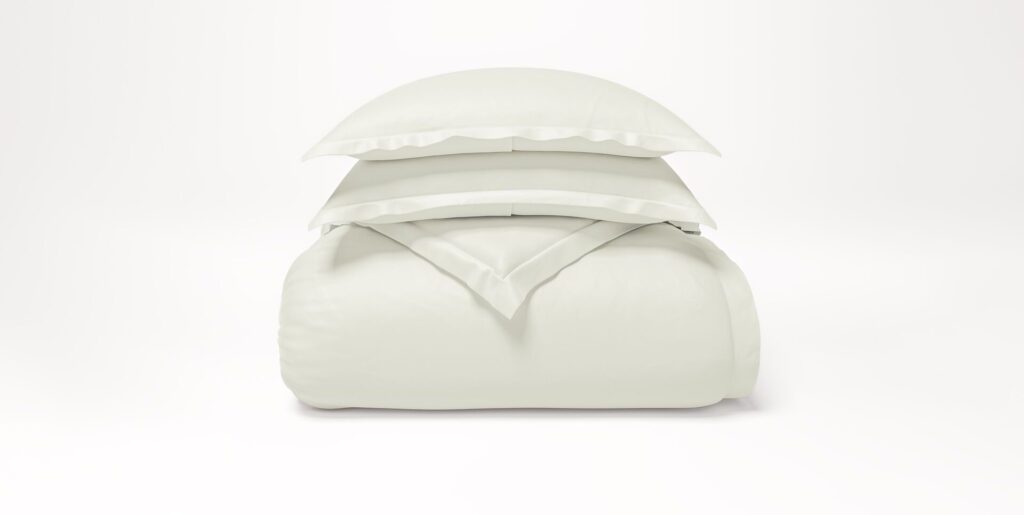
Organic Sateen Duvet Cover Set
Shop Now
Add a luxuriously inviting finish to your bed with our organic cotton duvet cover and matching shams. Silky-soft 300-thread count sateen weave gets softer with every wash.
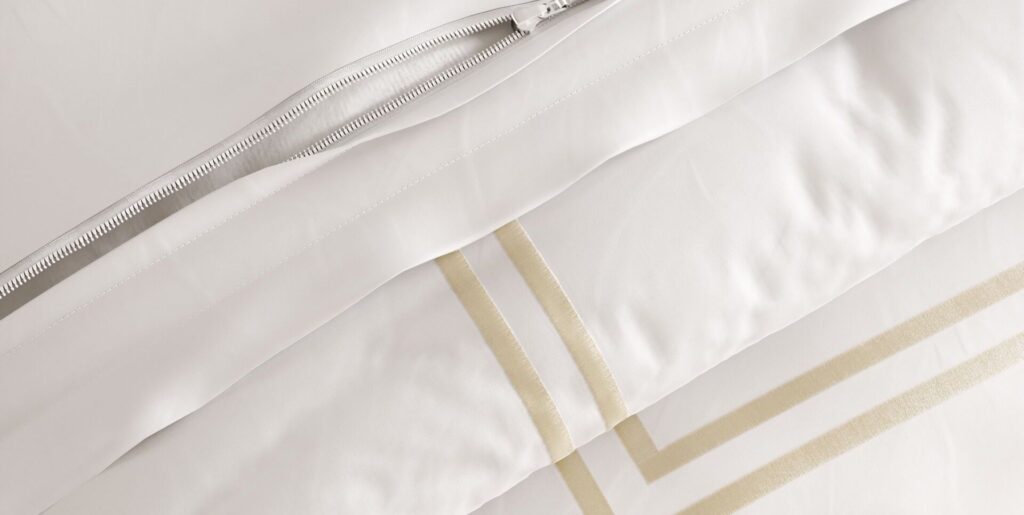
Embroidered Sateen Duvet Cover Set
Shop Now
Add a luxuriously inviting finish to your bed with our organic cotton duvet cover and matching shams. Silky-soft 300 thread count sateen weave gets softer with every wash.
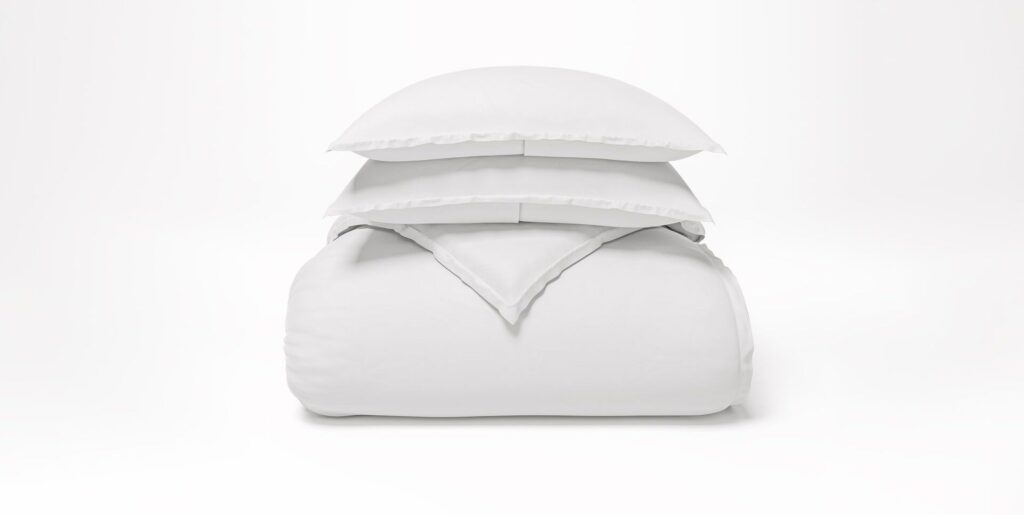
Organic Percale Duvet Cover Set
Shop Now
Instantly give your bed a dose of cozy-casual luxury with our organic cotton duvet cover and matching shams. Its crisp and cool 200 thread count percale weave gets softer with every wash.

Banded Percale Duvet Cover Set
Shop Now
Sleep soundly in cozy luxury with our banded percale cotton duvet cover and matching shams. They’re made from breathable long-staple cotton that gets softer and better with every wash.

Waffle Knit Duvet Cover Set
Shop Now
Dive into the undeniably plush and airy comfort of our waffle weave duvet cover and matching shams.
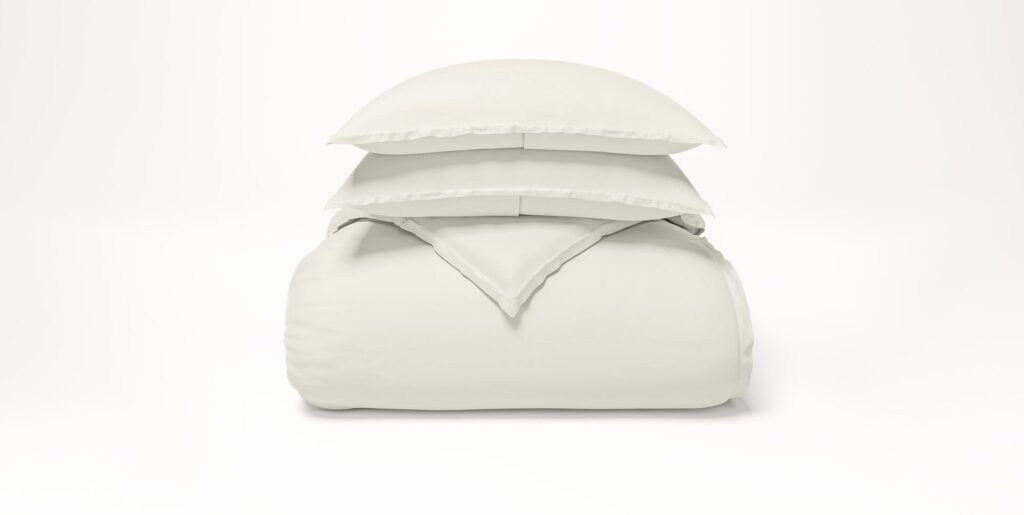
Linen Duvet Cover Set
Shop Now
Add a luxuriously inviting finish to your bed with our deluxe linen duvet cover and matching shams. Made with responsibly-sourced, all-natural European linen that gets softer with every wash.
FAQs
How do I properly align the comforter with the duvet cover?
“Most people simply shove the comforter in and hope for the best,” notes Saab. “This is why they end up with lumps, but the right way is simple.”
Here’s Saab’s advice: Start with laying the duvet cover flat, spread the insert on top so the corners match, and tie them to secure. Flip the cover over and give it a shake to ensure everything sits smooth and snug.
What techniques can I use to make inserting a comforter into a duvet cover easier?
There are two main techniques you can utilize to insert a comforter into a duvet. There’s the “traditional method” in which you’ll turn the cover inside out, grab the far corners of both the cover and the comforter together, and pull them through the opening.
Then there’s the “burrito roll” technique where you’ll turn the cover inside out, lay the comforter on top, and roll them up together from the top of the bed to the bottom, like a burrito. Tuck the rolled ends into the cover’s opening, then unroll it back up the bed.
Are there any tools or accessories that can assist with putting a comforter in a duvet cover?
You can always use duvet ties or clips to prevent the comforter from drifting inside.
How can I keep the comforter from shifting inside the duvet cover?
“The secret to stopping a shifting comforter is to lock it down before it moves,” says Saab. “Use corner ties or clips if your cover has them as they anchor the corners and stop the comforter from sliding around.”
If your cover doesn’t have ties, duvet clips can do the same job. “Once the corners are secured, a quick shake evens out the fill and keeps everything looking smooth and snug,” says Saab.
Shop comforters, duvet covers, and more at Saatva
Now that you know how to effectively, and efficiently, insert a comforter into a duvet comforter, you can shop our wide range of top-of-bedding items, including comforters and duvet covers.
Explore our bedding collection to discover your perfect match.

Shelby Deering
Shelby Deering is a Madison, Wisconsin-based freelance lifestyle writer contributing home design and health articles to national publications. When she’s not writing, you’ll find her hiking, running, or walking with her husband and corgi, Dolly.
Related Stories
-
Best Cyber Monday Bedding, Pajamas, and Tech Deals of 2025
-
 Best Black Friday Bedding Deals of 2025
-
 Lyocell vs. Cotton: Which Sheet Material Is Best for You?
Table of Contents
