
 Does Milk Thistle Help You Sleep Better?
Key Takeaways:
- Valerian root promotes relaxation by boosting and prolonging the activity of GABA, an inhibitory neurotransmitter that calms an overstimulated nervous system.
- For sleep support, typical usage involves taking 300–600 mg of valerian root extract in capsule, tea, or tincture form about 30 to 60 minutes before bedtime for up to six weeks.
- Because valerian has sedative properties, it should not be combined with alcohol, other sleep aids, or central nervous system depressants due to the risk of oversedation.
Most of us know that good sleep is essential for good health. How well you slept the night before can also make or break your day. If you’ve been tossing and turning more than usual lately, you might be on the hunt for natural sleep aids. One sleep-supporting herb on the list? Valerian root.
In this article, we cover what valerian root is, how it works in the brain, how it might improve sleep, and how to use it safely.
What is valerian root?
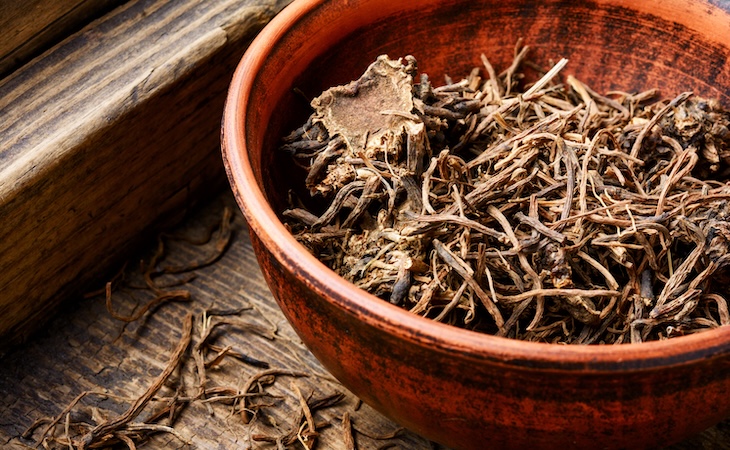
Valerian (Valeriana officinalis) is a perennial herb that’s native to Europe and parts of Asia. It has a distinct and unpleasant odor that some people say reminds them of dirty socks or blue cheese. The valerian plant’s roots are commonly used in natural sleep aid preparations, including supplements and teas.
It’s important to understand that valerian root isn’t a medication. For some people, it might not help with sleep at all. Over the centuries and around the world, valerian root has been used as both a stimulant and an insomnia treatment.
How valerian root works in the brain
Valerian root may have a calming effect by increasing the brain’s available supply of gamma-aminobutyric acid (GABA). GABA is a neurotransmitter that helps regulate brain activity, naturally slowing down an overexcited or overstimulated brain. Troy Alexander-El, MD, an internal medicine physician in Illinois, likens it to a lampshade that dims the room by letting some, but not all, light through.
Valerian root might increase GABA in two ways: first, by causing brain nerve endings to release more GABA, and second, by slowing how fast the brain metabolizes (removes) GABA from the nervous system.
“Valerian allows GABA to work for a longer amount of time, therefore prolonging the calming effect it has on the nervous system,” says Alexander-El. Ultimately, this reduces anxiety and stress so you can fall asleep more easily.
What the research says about valerian root for sleep
First things first: Research on valerian for sleep is inconclusive. Many people say valerian root helps them sleep—and small studies support this claim—but we don’t have enough strong evidence to predict when it might improve someone’s sleep and when it won’t.
Here’s a closer look at the research on valerian root for sleep:
- A meta-analysis of 18 studies concluded that while valerian can improve insomnia symptoms, there isn’t enough evidence to confirm exactly how much improvement can be made (or with what dose or for how long).
- In one study, 128 people were given a 400 milligram (mg) valerian extract, 60 mg valerian preparation, or a placebo. Results showed that 400 mg valerian extract reduced sleep latency (the time it takes to fall asleep) and nighttime awakenings significantly more than the lower dose or placebo.
- A study of insomnia patients who took 600-mg daily doses of valerian for six weeks experienced the same improvements in sleep as those who took the anxiety medication oxazepam.
- A small study of 16 people with insomnia found that those who took an extract of dried valerian root before bed fell into a deep sleep significantly faster than those who took a placebo.
How to take valerian root: proper dosage, forms, and timing
Herbal preparations aren’t strictly regulated like prescription or over-the-counter medications, so use due diligence to find a quality, third-party-tested product. It’s a good idea to consult your healthcare provider before trying any of them.
Valerian root is considered generally safe for most healthy adults. It can be consumed as a supplement (capsules), tea, or tincture. Typical dosage guidance is 300–600 mg of valerian root extract per day for up to six weeks.
Most valerian root products are intended to be taken 30–60 minutes before bed. Since valerian works by increasing GABA, the effects should work gradually. Unlike sleeping pills, which might feel like they knock you out within minutes of taking them, valerian root should simply produce a gentle calming effect.
| How to Take Valerian Root for Sleep | |||
| Forms | Dose Strength | Timing | Duration |
| CapsuleTeaTincture | 300–600 mg, once daily | 30–60 minutes before bed | < 6 weeks |
Potential side effects of valerian root
Valerian root is a natural herb, but that doesn’t mean it can’t cause unpleasant symptoms.
Potential side effects of valerian include:
- Headache
- Stomachache
- Brain fog
- Feeling excited or nervous
- Vivid dreams
If side effects are severe or persistent, stop taking valerian. Symptoms that interfere with your ability to function the day after taking valerian should be reported to your healthcare provider.
Safety warnings for valerian root
While valerian root is considered safe for most adults, it can interact with alcohol and certain medications.
Alexander-EL emphasizes that you should talk to a physician before taking valerian root if you:
- Drink alcohol
- Take any medications that cause sedation (such as benzodiazepines)
- Have plans to go under anesthesia for a surgical procedure
In all these cases, the primary risk is over-sedation. Given that, it’s also a good idea to avoid driving or the use of heavy machinery until you know how valerian root affects you.
FAQs
How long does valerian root take to work for sleep?
There haven’t been enough quality studies on valerian root for sleep to know how long it takes to work. Alexander-El says that in at least one study, sleep improved after taking valerian for more than 14 nights. Meaning, noticeable results may or may not kick in after just one dose.
Can you take valerian root every night?
There is not enough clinical data to confirm that it is safe or beneficial to take valerian for more than six weeks, according to Alexander-El. However, she adds that there’s no evidence that valerian is habit-forming like other sleep aids or alcohol.
What should you avoid combining with valerian root?
Do not take valerian root with other sleep aids (like melatonin) or relaxants (like kava or alcohol). You should also avoid taking any sedating medication, including benzodiazepines, central nervous system depressants, or opiates.

Leandra Beabout
Leandra Beabout is a freelance health and travel writer based between Indiana and India. Her work has been published in Reader’s Digest, Greatist, The Guardian, CNN Travel, Lonely Planet, and more. She was previously an English teacher and daily newspaper reporter.
Related Stories
-
Does Milk Thistle Help You Sleep Better?
-
 Can Psyllium Husk Help You Sleep Better?
-
 Is 7 Hours of Sleep Enough?
Table of Contents
