
 Are There Fleas in Your Bed? Here’s How to Tell (and What to Do About It)
Key Takeaways:
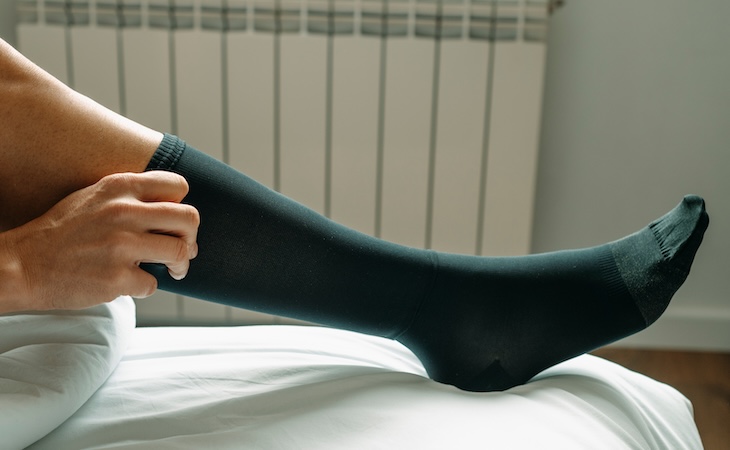
- Most people should not wear compression socks to sleep unless specifically prescribed by a doctor for conditions like lymphedema, venous ulcers, or post-surgery recovery.
- Wearing compression socks overnight without medical guidance can lead to skin irritation, reduced blood flow, nerve compression, overheating, and disrupted sleep.
- To safely relieve leg swelling or restlessness before bed, try daytime compression, gentle stretching, elevated foot positioning, or a weighted blanket instead.
If you’ve ever looked into what to pack for a long-haul flight, compression socks might come up at the top of your findings. They may help improve blood flow in the legs, prevent or reduce swelling, and manage other problems that can come from sitting too long.
Another less common and more controversial use is sleeping in compression socks, and for good reason.
Should you really go to bed in compression socks? The short answer: Most people don’t need to, unless their doctor recommends it. This article explains more.
Can you wear compression socks to sleep safely?
People have been wearing compression socks as far back as 450–350 B.C. for all kinds of reasons, both health-related and otherwise. And they’re generally safe to wear during the day.
“Clinicians recommend the use of compression socks during sleep based on medical evaluation, for example, in cases of lymphedema (leg swelling), venous ulcers (sores on the legs that take a while to heal), or post-surgery recovery to help prevent blood clots,” says Carleara Weiss, PhD, RN, and Sleep Science Advisor for Aeroflow Sleep. “I do not recommend using compression socks to sleep without a medical prescription.”
How compression socks work
Compression socks usually feel like a hug for your legs. They work by squeezing your legs, which compresses the veins and helps blood flow more easily.
With smoother blood flow, blood can return to the heart rather than pool in the legs, helping prevent leg swelling, reduce your risk of blood clots, and more.
There are three types of compression socks: Graduated compression socks, anti-embolism socks, and flat pressure socks. Graduated compression socks and anti-embolism socks function the same way, while flat pressure socks are different.
Graduated compression socks
Graduated compression socks are medical-grade socks and are sometimes called medical compression stockings. They’re also the most popular type of compression socks.
The gentle tightness they provide is most noticeable around your ankles, and they get looser further up your legs.
These socks are made to meet strict medical and technical specifications so they can provide specific levels of pressure and compression, stay comfortable while being beneficial, and last as long as intended.
A doctor will likely prescribe them if you have health conditions like chronic venous disease or leg swelling.
Anti-embolism socks
Anti-embolism socks are sometimes mistaken for graduated compression socks. They also work the same way, providing the most compression at the ankles and reducing it higher up the legs.
However, they’re specifically recommended for bedridden patients getting treatment in the hospital. They may help reduce the risk of blood clots forming in the legs. A doctor is unlikely to prescribe them for at-home use.
Flat compression socks
Flat compression socks are non-medical socks. These are the types you’ll get for a long-haul flight, for example, or to comfort and relieve your legs if they hurt, feel tired, or feel heavy.
Flat compression socks don’t squeeze the legs as much as graduated compression socks or anti-embolism ones, and they aren’t designed to strict medical and technical standards. You can buy them without a doctor’s prescription.
Potential benefits: reducing leg swelling and restless Legs
For people with a clinical recommendation, the potential benefits of compression socks include comfort for leg aching and reduced swelling, says Weiss.
Keep in mind, though, that only a few studies have looked into the impact of compression socks on sleep.
“Most focus on daytime use,” says Weiss. “Based on this limited evidence, daytime compression socks may reduce overnight fluid accumulation and may benefit people with obstructive sleep apnea.”
If wearing them all night feels uncomfortable or affects how long and how well you sleep, talk to your doctor. They may recommend a different type of socks or a different way to wear them.
Potential risks: impaired nighttime arterial circulation and skin irritation
Little surprise, wearing compression socks all night has its cons.
“Potential risks include skin irritation or pressure injury if the socks act like a tourniquet, tingling or numbness from nerve compression, and reduced blood flow in people with arterial disease,” says Weiss.
You may also experience discomfort, overheating, and fragmented sleep when you wear them to bed, she adds.
If your doctor recommends wearing them at night, wear them exactly as prescribed. If you don’t have a prescription, you’d probably sleep more comfortably and uninterruptedly when you don’t have them on. You may also avoid other risks, like skin irritation.
If you only wear them during the day and want to take a short nap, leaving them on is unlikely to cause problems. This might also be the more practical decision if you still have to put them on when you wake anyway.
Who should avoid wearing compression socks at night?
According to Weiss, clinical recommendations for overnight compression include lymphedema (leg swelling), venous leg ulcers, and preventing postoperative blood clots.
She warns that people with heart diseases, including peripheral artery disease, poor circulation, and heart failure, should avoid wearing them overnight.
She also advises against wearing them to bed if you have diabetes, peripheral neuropathy (nerve problems outside your brain and spinal cord), fragile skin, open wounds, dermatitis, or skin infections.
Safe evening compression routines and alternatives
Safe to say, it’s best to wear compression socks only if your doctor has prescribed them. If not, you can still explore other safer ways to decompress after a long day. These tips may not only ease aching legs but also help prepare your body for a restful night’s sleep.
- Practice movements that help ease tense muscles. Tense the muscles in your feet and relax them, each for two seconds. Do this for your legs and other major muscle groups.
- Breathe through your belly. Breathe in and let your belly rise with your breath, but not your chest. Hold for five seconds and release for five seconds. Repeat till you feel better.
- Listen to relaxing music or an audio bedtime story.
- Sleep under a weighted blanket to help relieve tiredness, anxiety, and restlessness. If you have insomnia, attention deficit hyperactivity disorder (ADHD), or autism spectrum disorder (ASD), a weighted blanket may be particularly helpful.
- Drink herbal teas that promote relaxation, like chamomile and lavender, before bedtime.
- Do gentle stretches or yoga exercises.
- Go to bed with your feet elevated on a pillow, for instance, to help blood flow more easily.
The bottom line: You most likely don’t need to wear compression socks to sleep unless your doctor tells you to. Wearing them overnight without a prescription may cause more harm than good.
For most people, a relaxing nighttime routine and sleep hygiene practices, like a consistent bedtime and eight or more hours of sleep, are enough for a restful night. If you struggle to fall asleep and stay asleep, talk with a doctor.
FAQs
Is it safe to wear compression socks overnight?
It’s generally not recommended unless prescribed by a physician. Wearing these socks overnight without medical supervision can cause skin irritation, nerve compression, reduced blood flow, and sleep disruption.
Who should not sleep in compression socks?
People with heart conditions (such as peripheral artery disease, poor circulation, or heart failure), diabetes, peripheral neuropathy, fragile skin, open wounds, dermatitis, or skin infections should avoid wearing compression socks overnight.
When might a doctor recommend overnight compression?
A doctor may prescribe overnight compression to help manage specific medical conditions, such as lymphedema, venous leg ulcers, or post-surgery recovery to prevent blood clots.

Frances Gatta
Frances Gatta is a freelance writer and content marketing consultant for healthcare and life sciences companies. Her work has appeared in Nature, HealthTech Magazine, WebMD, Forbes Health, Healthline, Everyday Health, HealthCentral, Healthgrades, and more. You can connect with her on LinkedIn and Twitter.
Related Stories
-
Are There Fleas in Your Bed? Here’s How to Tell (and What to Do About It)
-
 Can Ube Help You Sleep Better?
-
 How Sleep Affects Dopamine
Table of Contents
