
 How to Use Interior Design Psychology in Your Bedroom
Bedroom Furniture, Bedroom Style
October 22, 2026
Headboard Sizes and Dimensions (With Chart)
Written by Nicole Pyles

Key Takeaways:
- Standard headboards should extend two to four inches beyond the width of your mattress to account for the frame and prevent a cramped visual appearance.
- Headboard heights range from low (14–24 inches) for minimalist twin beds, to medium (25–45 inches) for queens, to tall (58 inches) for king mattresses and higher ceilings.
- Wall-mounted headboards offer a modern look for adjustable beds, while frame-mounted options provide affordability and easy mobility for renters.
Headboards were originally intended to be an insulating layer to protect sleepers from the cold. While our modern era may negate the headboard’s original purpose, adding one to your bedroom set can enhance your room’s style and add a sense of comfort.
You can choose from countless headboard styles and sizes to accommodate any mattress size, from twin to California king and beyond.
However, there are a few factors to consider when purchasing your headboard, including your room size, mattress size, and preferred installation method.
We’ve created a helpful guide to help you choose the right headboard for your room.
Complete headboard dimensions chart
Below, you’ll find a headboard size chart (with the corresponding mattresses). The chart contains all of the most popular headboard sizes, from twin to queen to king and everything in between.
| Mattress Size | Average Headboard Widths | Average Headboard Heights |
| Twin/twin XL mattress (approx. 38 inches wide) | 40 to 42 inches wide | 20 to 58 inches |
| Full mattress (approx. 54 inches wide) | 56 to 58 inches | 38 to 54 to inches |
| Queen mattress (approx. 60 inches wide) | 62 to 64 inches | 38 to 54 inches |
| King mattress (approx. 76 inches wide) | 78 to 80 inches | 38 to 58 inches |
| California ing mattress (approx. 72 inches wide) | 74 to 76 inches | 38 to 58 inches |
Standard headboard widths vs. extra-wide headboards
A standard-sized headboard extends 2 to 4 inches beyond the mattress. Standard sizes for mattresses include:
- A twin/twin XL mattress is about 38 inches wide and uses a headboard width of 40 to 42 inches
- A full mattress is about 54 inches wide and uses a headboard width of 56 to 58 inches
- A queen mattress is about 60 inches wide and uses a headboard width of about 62 to 64 inches
- A king mattress is about 76 inches wide and uses a headboard width of 78 to 80 inches
- A California king is about 72 inches wide and uses a headboard width of 74 to 76 inches
An extra-wide headboard extends beyond that point, as if it’s almost hugging the mattress. They’ve grown in popularity, adding a bold statement to your bedroom while giving the room a warmer ambiance. You can also add an extra-wide headboard with built-in side tables for an enclosed look in your bedroom.
Before opting for an extra-wide headboard, consider your bedroom size first. An extra-wide headboard in a large room looks inviting, but one in a small room can look cramped.
If you are opting for an extra-wide headboard, choose a size up from the mattress.
For example, if you want an extra-wide headboard for a twin/twin XL mattress, you would opt for a full or queen headboard, depending on the room size and whether you plan to incorporate side tables or even another twin bed.
Standard headboard heights: low, medium, and tall options
Headboard heights range from about 14 inches to 60 inches. The ideal height depends largely on your mattress size and foundation.
You also want to consider your own height and personal habits, such as whether you like to sit up and read in bed.
All of these factors can influence whether you should opt for a low, medium, or tall headboard option.
Low headboards
Low headboard options average about 14 to 24 inches above the mattress. Twin and full beds typically work well with this height.
The lower end of the scale suits twin/twin XL beds best, while the full mattress works at the higher end of that scale.
Beyond mattress size, low headboard heights can also complement minimalist and modern styles.
You may also consider this height if you have a lower mattress foundation, such as a platform bed, which may be overwhelmed by a medium or tall height.
Medium headboards
A medium headboard ranges from 25 to 45 inches and is typically suitable for a queen mattress.
If you’re taller, you may appreciate the extra back support it provides, especially if you like to read in bed.
Even if you have a twin/twin XL or full, this height may work if you have a thick mattress, such as a pillow top, or a higher platform or box spring.
It’s also ideal if you tend to stack pillows and want the headboard to accommodate them.
Tall headboards
With an average height of 58 inches, tall headboards work well with king or California king mattresses.
However, you want to consider your ceiling first. If you have a low ceiling, a tall headboard may overwhelm the space, giving it that cramped look that you want to avoid.
Wall-mounted vs. frame-mounted headboards
Both wall-mounted and frame-mounted headboards have benefits.
Wall-mounted headboards
As the name implies, a wall-mounted headboard is mounted to the wall. It requires no attachment to the bedframe. It’s ideal if your bed is adjustable and you don’t want to worry about complicated installation.
Wall-mounted headboards have become increasingly popular with modern and high-end bedroom styles.
They can also offer space-saving benefits, but they often requires more professional installation to ensure they’re securely mounted.
Flush-mount brackets usually work for a lightweight headboard. French cleats are best for heavier styles. Before drilling any holes into the wall, use a stud finder and a level for alignment.
Frame-mounted headboards
A frame-mounted headboard is ideal if you rent your home or apartment and want to avoid wear and tear on the wall.
You may also prefer this option if you like the freedom to reposition the bed in the room. Plus, attachable, frame-mounted options tend to be less expensive.
If you’re concerned about installing a headboard onto a separate bed frame, platform, or box spring-style mattress, you may also consider a bed frame with a built-in headboard, such as these bed frames. You avoid having to measure the headboard to a separate frame in advance to ensure an appropriate fit.
For frame mounting, measure the distance from any pre-drilled holes on your frame to the holes in the headboard. Universal brackets will work best if they don’t line up with each other.
How to measure your bed and room before buying a headboard
Before buying a headboard, you’ll need to measure your bed and room first. As you take measurements, mark the proposed height and width with painter’s tape to visualize how the headboard will look in your bedroom.
- Begin by measuring the width of your mattress, including any bed frame, foundation, platform, or box spring. This will help determine the ideal width of the frame.
- Measure the height from the floor to the top of the mattress, including any platform, frame, or box spring. This establishes the baseline for your headboard height, as it is measured from the top of your mattress.
- Take into account any windows, shelves, or paintings in the area where your mattress will go. This can determine the ideal height of your bedframe.
- Measure the floor-to-ceiling height, leaving at least 24 to 36 inches of ceiling height.
- Take the room’s overall depth into account to determine how much of it can accommodate the headboard.
Shop luxury bed frames with headboards from Saatva
This carousel automatically rotates through products. Use the pause button to stop rotation, or use the slide dots to navigate.
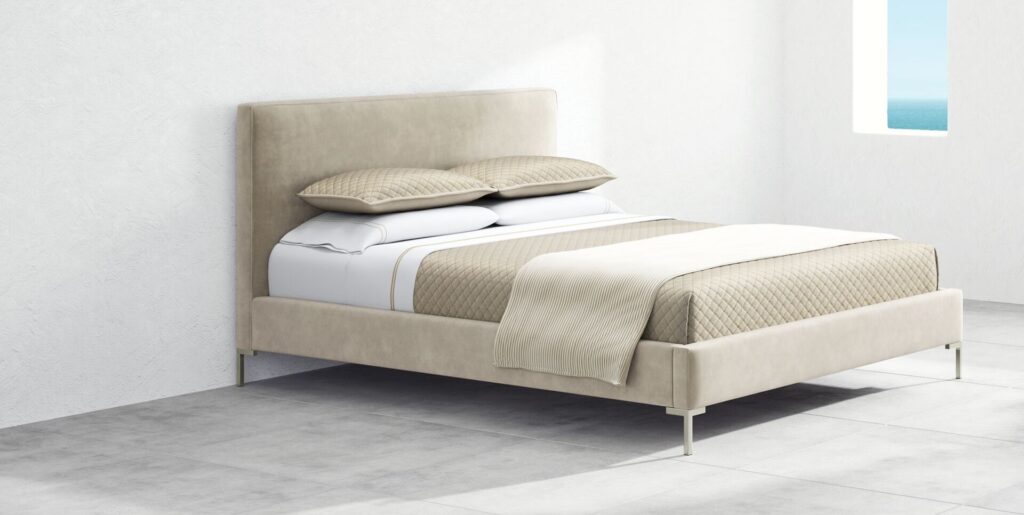
Santorini Bed Frame
Shop Now
A platform bed, with a lower profile, sleek lines, and graceful legs. Featuring plush padded edges that lend a rich look and a fully upholstered back. Available in taupe and graphite vintage velvet.

Rhodes Bed Frame
Shop Now
The Rhodes is a companion bed frame to our ever-popular Santorini. It boasts the same sleek, sophisticated lines, updated with a taller headboard and modern matte brass legs.
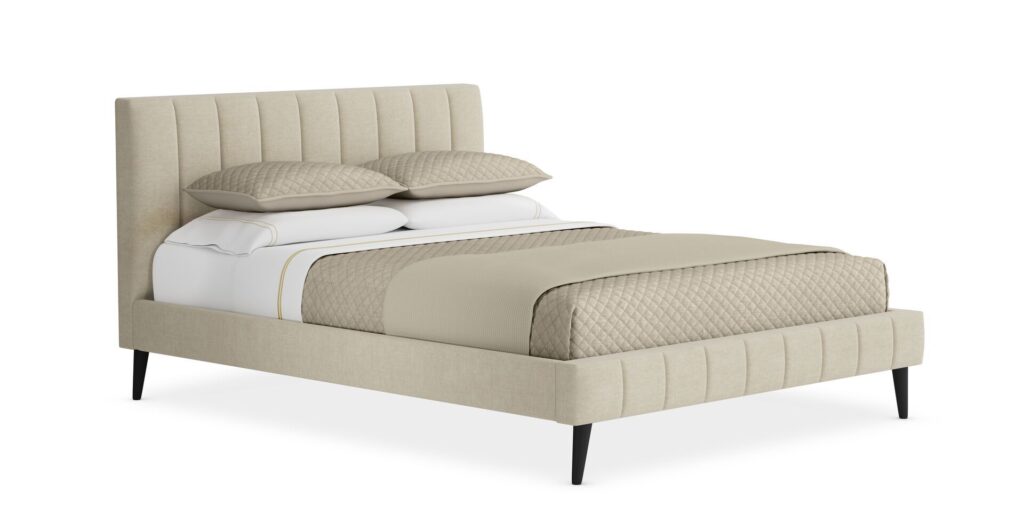
Valencia Bed Frame
Shop Now
A classic yet contemporary platform bed frame with deep channel tufting. Available in natural linen and taupe and graphite vintage velvet.
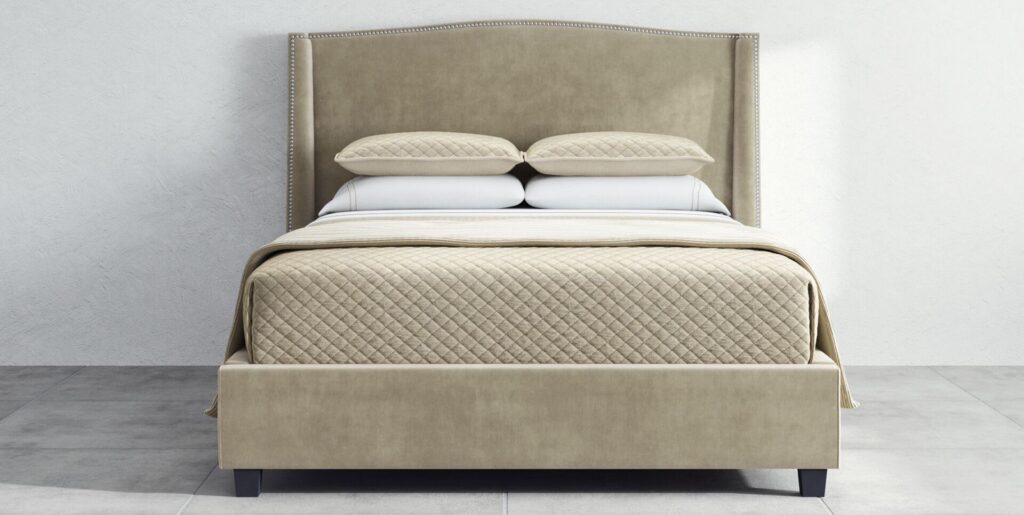
Minori Bed Frame
Shop Now
An understated bed frame, with a lower profile headboard and gently tapered wings. Featuring a nailhead trim and fully upholstered back. Available in natural linen and taupe and graphite vintage velvet.
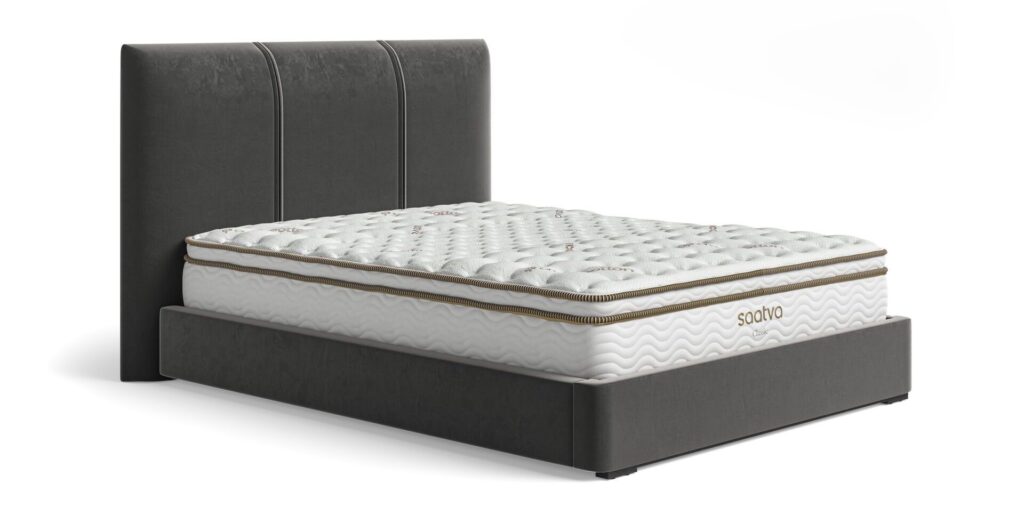
Lucerne Bed Frame
Shop Now
A plush and elegant platform bed frame with stately simplicity. Anchored by its plush, oversized headboard, this bed frame adds an inviting ambiance to any bedroom.
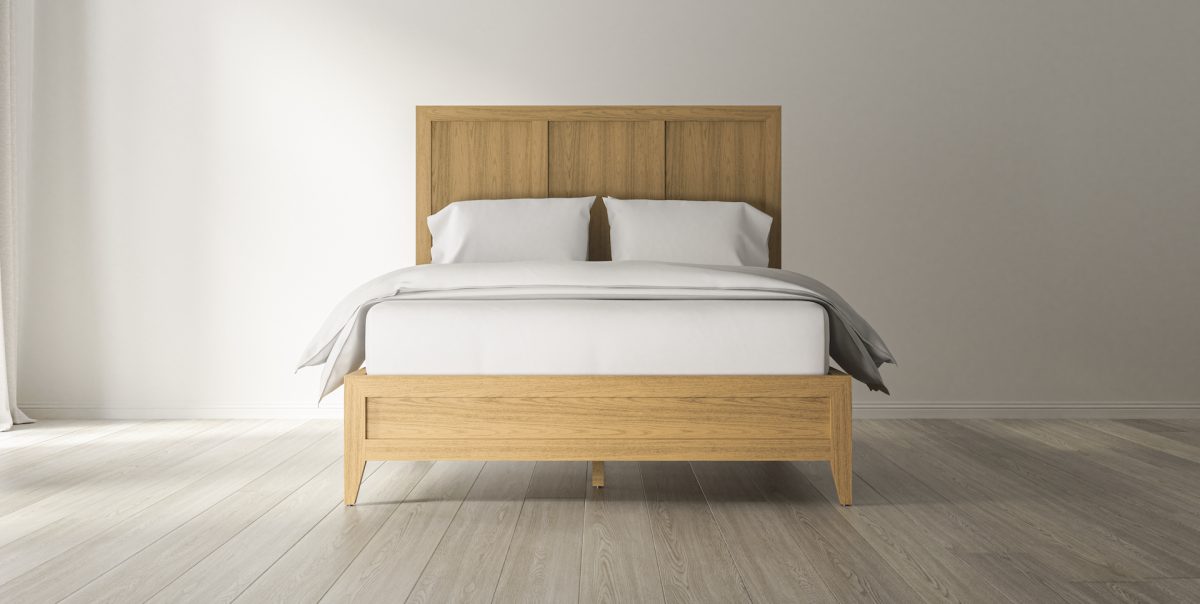
Cologne
Shop Now
The striking Cologne is the all-wood version of our popular Calais. Transform your room with this modern translation of the traditional panel bed frame.

Siena Bed Frame
Shop Now
A timeless platform bed frame crafted with fine leather. Its refined headboard and luxurious double French seams prove that elegance is all in the simple details.
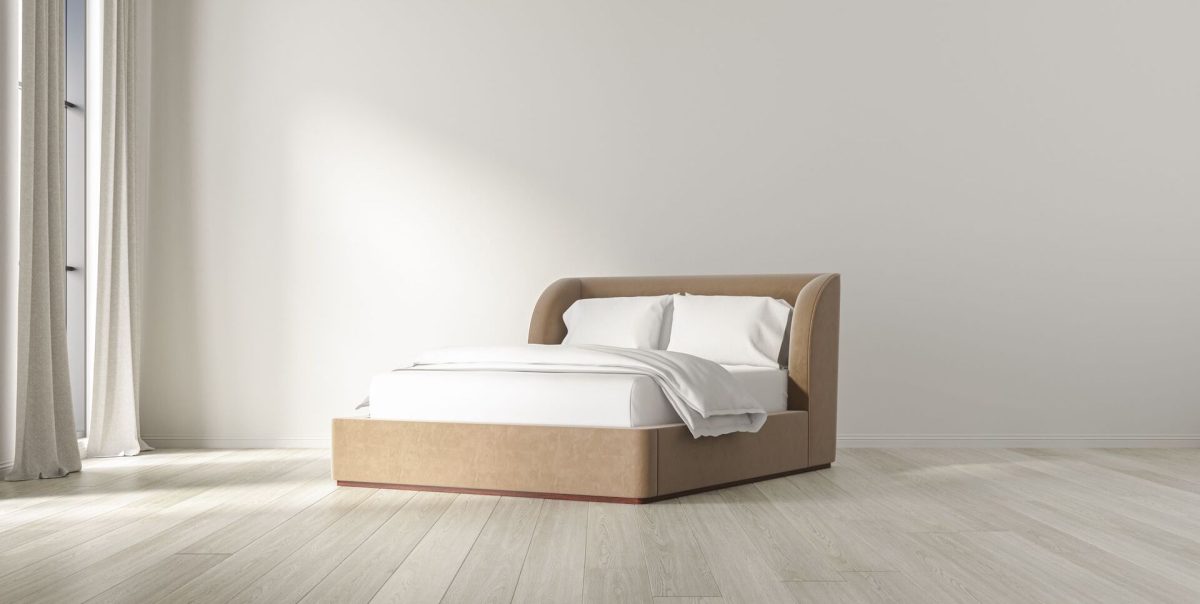
Cassis Bed Frame
Shop Now
Like the charming coastal town in the South of France from which it derives its name, Cassis boasts a relaxed yet refined comfort. Its organic, sculptural lines and low profile invite you to spend more quality time in bed.
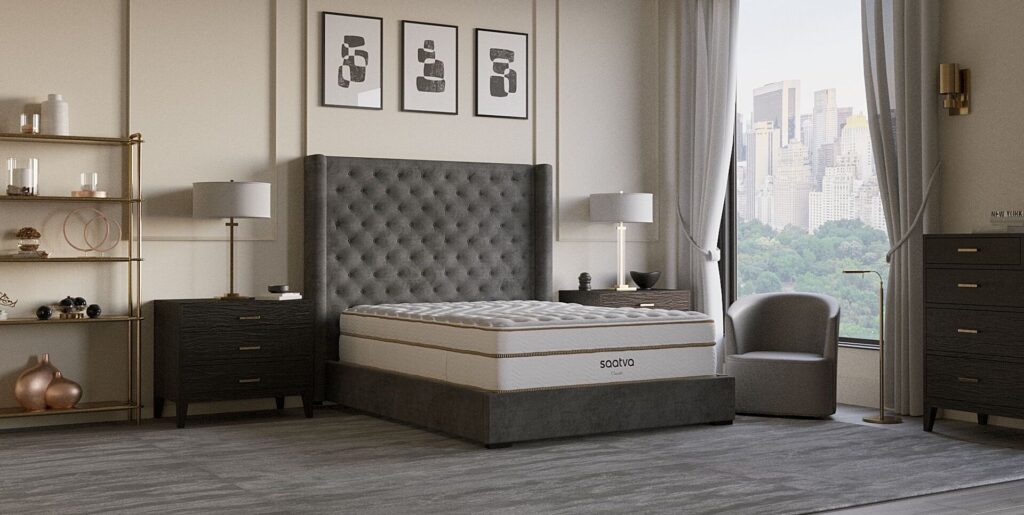
Amalfi Bed Frame
Shop Now
A tastefully grand bed frame with a timeless appeal. With a button-tufted headboard and clean side rails, this bed is versatile enough to work in a dressed-up or dressed-down space.
FAQs
Should a headboard be wider than the mattress?
Yes, your headboard needs to be at least 2 inches wider than the mattress. This leaves room for your bed’s foundation or platform. Having a headboard too close to the width of your mattress can make the bed look smaller, or the overall space look too narrow or cramped.
How tall should a headboard be above the mattress?
The height of a headboard can vary based on your mattress size, whether you use a platform, foundation, or box spring, personal design preferences, and your own height. A low headboard, usually about 14 inches tall, is ideal for twin or full beds or for those who prefer a minimalist style.
Medium-height frames, usually for a queen-size bed, can also suit someone taller or someone who wants back support while reading. A tall frame is ideal for a king or California king, but also make sure you have the room height for the headboard.
Can you use a queen headboard with a full or king bed?
No, generally you don’t want to use a queen headboard with a king bed. A queen headboard is designed to accommodate the narrower width of a queen bed compared to a king or California king bed. You may be able to use it for a full-size mattress, but you should measure in advance to ensure the width fits the room.
Find the best bed frame with a headboard at Saatva
Now that you what the most common headboard sizes are, it’s time to find the perfect bed frame for your bed. Saatva offers a wide range of high-quality bed frames with headboards to upgrade your bedroom style. Check out our selection of bed frames to find your perfect match.

Nicole Pyles
Nicole Pyles is a writer living in Portland, Oregon. Her fiction has appeared in Sky Island Journal, Arlington Literary Journal, The Voices Project, The Ocotillo Review, and The Gold Man Review. A poem of hers was also featured in the anthology DEAR LEADERS TALES. You can read her other writing on Mental Floss, Better Homes and Gardens, Tom’s Guide, and in a random issue of Woman’s World. Since she’s not active on social media very much, stay in touch by following her writing blog at World of My Imagination.
Related Stories
-
How to Use Interior Design Psychology in Your Bedroom
-
 10 Ways to Create a Hygge Bedroom
-
 Everything You Need to Know About Remodeling a Bedroom
Table of Contents
