
 How Sleep Affects Dopamine
Sleep & Athletes, Sleep Health
February 17, 2026
U.S. Olympian Shani Davis on the Importance of Sleep for Athletes: “It’s Like Recharging a Battery”
Written by Christina Heiser
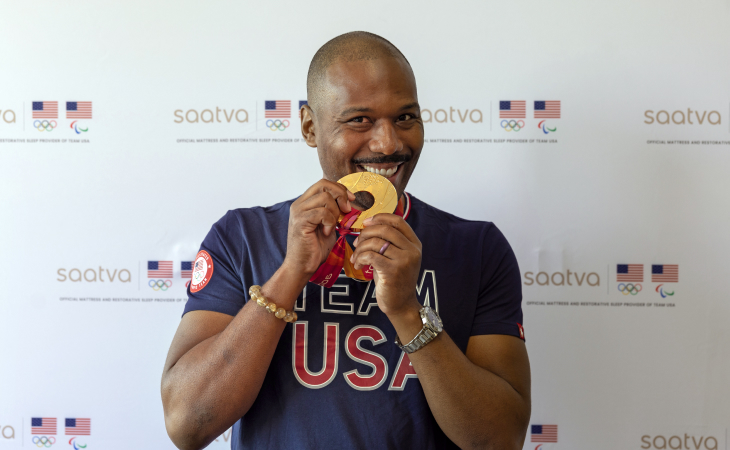
Retired speed skating champion Shani Davis, a U.S. Olympic gold and silver medalist from 2006 and 2010, credits quality sleep as an essential factor to peak performance. He likens sleep to recharging a battery and shares tips including calming bedtime rituals, phone-free reflection, travel adjustment strategies, in-flight comfort, and prioritizing recovery with naps.
Shani Davis knows a thing or two about winning. The retired speed skating icon made history at the Olympic Winter Games Torino 2006 and Olympic Winter Games Vancouver 2010, where he became the first man to win back-to-back gold medals in the 1000m.
With two gold and two silver medals to his name, Davis credits sleep as one major factor in his success.
“Sleep plays a crucial role in athletic performance,” says Davis. “I compare it to my cell phone—training and competing leaves you drained. Sleeping is like recharging your battery. Waking up refreshed and feeling ready for the demands of performing at high levels.”
Davis adds that he would always sense the difference from a good night’s rest to ones where he tossed and turned and woke up feeling flat for the day.
“Sometimes that is out of our control, but going to bed earlier than normal helps if sometimes getting to bed is a challenge,” he says. “For optimal performance and asking the most from your body to perform and really get after it, good quality sleep is highly important.”
Ahead of the Olympic Winter Games Milano Cortina 2026, we chatted with Davis about his current nighttime habits, how he gets better sleep while traveling, and what his recovery routine looked like during competition.
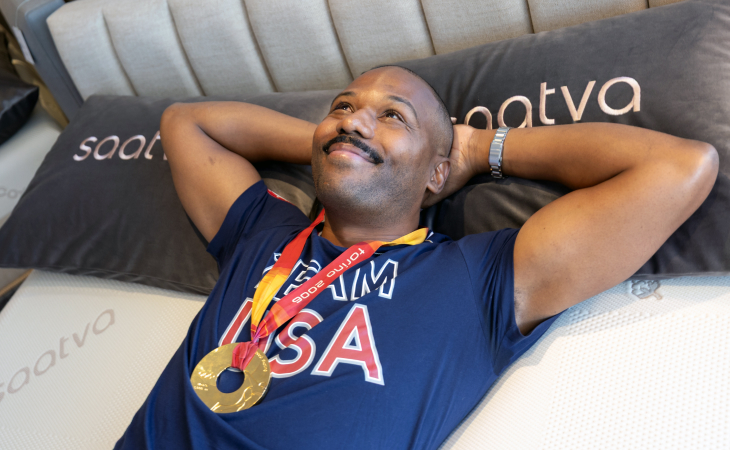
Shani Davis’s top sleep tips
1. Create a relaxing bedtime environment
Ensuring your bedroom is as conducive to sleep as possible is key. For Davis, that looks like having a water bottle and snacks by his bedside in case he wakes up with the urge to drink or munch on something.
Davis says he also likes to have a humidifier handy, with some essential oils such as lavender to help aid in relaxation.
Other snooze-inducing tips? Davis will play ambient music in the background with the volume really low, so he has to really focus on hearing the sounds.
“If I am not too sleepy, I would even turn on my lava lamp and just watch the shapes dance around until there is a consistent pattern flowing through the lamp,” he adds.
Sleeping is like recharging your battery. Waking up refreshed and feeling ready for the demands of performing at high levels.” – Shani Davis
2. Make time for reflection
One no-no in the bedroom? Using your phone as this can make it harder to fall asleep. “I set my phone to silent, and then I go under the covers,” says Davis.
He then likes to reflect on what he did for the day, which gets him more tired. “I just shut my eyes and slowly start strategizing for what’s up for me the next day—puts me out like a light every time.”
3. Try to adjust to a new time zone quickly
Athletes often have to travel to different time zones for competition, which can mess with their ability to sleep. Davis has some words of wisdom on how to adjust to a new time.
“Changing time zones and acclimating to the different environment is really challenging,” he notes. “I try my best during the first day to adjust to the time change, staying up as long as I possibly can.”
He adds that sunlight is key, though rare in Scandinavia or Eastern Europe during the winter season.
“You do as you can to not let your home biological clock trick you into reverting back to your natural time, and you try your hardest to adjust,” says Davis. “Within a few days, I would feel decent and closer to competition I would feel ready.”
The bottom line: “Nothing is easy about it, but if I wanted to perform well and compete to my best abilities, this was something I had to master,” he says.
4. Get comfortable on a plane
For Davis, having an aisle seat helps him snooze more easily on a plane (as does being able to upgrade his seat!).
Some other ways to improve sleep on a plane?
“I invested in a good set of noise-canceling headphones so for the people in the back chatting up a storm or the unsettled child or baby, I wouldn’t hear them as much,” he says. “A good book to read or catching up on e-mails or journaling thoughts helped the most for me when trying to get good rest while traveling on a plane.”
5. Take recovery seriously
During his professional athletic career, Davis took recovery seriously.
“I did a ton of self-recovery things like foam rolling to cold baths whenever possible,” he says. “I would schedule massages as well, but I feel like the glue that held everything together was taking good quality naps throughout the day.”
Davis says taking short naps didn’t affect his ability to sleep at night. “I loved my naps during the small break we had from morning to afternoon training,” he says. “I looked forward to it everyday.”
Next, learn about how Saatva is supporting Team USA’s sleep and restoration.

Christina Heiser
Christina Heiser is the content director at Saatva. She has held previous positions at Everyday Health, Women’s Health, and L’Oréal. Christina serves as an ambassador for the nonprofit organization Beyond Celiac and is passionate about raising awareness about celiac disease. When she’s not working, you can find Christina traveling the world in search of the best gluten-free eats and trying out the latest beauty, fitness, and wellness trends. Check out her newsletter, Celiac Self-Care.
Related Stories
-
How Sleep Affects Dopamine
-
 What Do Sex Dreams Mean?
-
 Why Don’t I Dream?
Table of Contents
