
 Mattress Protector Sizes and Dimensions (With Chart)
Key Takeaways:
- Fleece is a synthetic polyester fabric that excels at trapping maximum body heat at a lower cost, whereas flannel is typically woven from natural cotton or wool to balance cozy warmth with moisture-wicking breathability.
- Hot sleepers and those prone to night sweats benefit most from breathable flannel, while cold sleepers seeking ultra-plush, lightweight insulation often prefer fleece.
- Both fabrics require gentle wash cycles, low-heat drying, and the avoidance of fabric softeners to prevent shrinkage, preserve softness, and minimize fiber pilling over time.
The nights are getting colder and longer in the Northern Hemisphere. While there are those who embrace the crispness in the air and the energizing shock of cold wood or tile flooring underfoot, some of us want to curl up and get cozy.
If you love how fall and winter invite fuzzy textures and warm clothing, you might also be drawn to swapping light summer blankets for thicker winter bedding. The two top contenders? Fleece or flannel.
Most of us can immediately picture being wrapped in a fleece or flannel blanket, but these two cocooning fabrics aren’t exactly the same.
Below, we unpack the differences between fleece vs. flannel. Which is warmer? Easier to maintain? And ultimately, which should you choose for your winter bedding?
At a glance: fleece vs. flannel fabrics
| Characteristic | Fleece | Flannel |
| Known for | Warmth and durability | Comfort and breathability |
| Feel | Plush | Soft |
| Material | Polyester | Wool or cotton |
| Material type | Synthetic | Natural fiber |
| Warmth | Very high | High |
| Breathability | Low | High |
| Durability | Very high | High |
Material origin: synthetic polyester fleece vs. cotton/wool flannel
In most cases, fleece is made of plush polyester and flannel is made of brushed cotton or wool. However, some flannel fabrics are made of polyester or poly-cotton blends.
Polyester is a petroleum-based synthetic material. Synthetics tend to be durable, but they also trap heat and odor more easily than natural fibers.
Cotton and wool are natural fibers. This means the material comes from natural sources. Cotton comes from the boll (seed-containing pod) of cotton plants, while wool might come from sheep, goats, or alpacas.
Warmth, weight, and moisture wicking performance
Both fleece and flannel are known for their warmth, but they keep your body warm in different ways.
Think of a fleece blanket: It’s extremely plush while remaining lightweight. The cushiony, sometimes nubbly fabric keeps you warm even if the blanket itself is thin or feather-light. How? By trapping your body heat. The longer you stay wrapped in fleece, the warmer you’ll feel. This can be a good thing if you tend to run cold—but it also means you might start to feel stifled or sweaty since fleece does not wick away moisture.
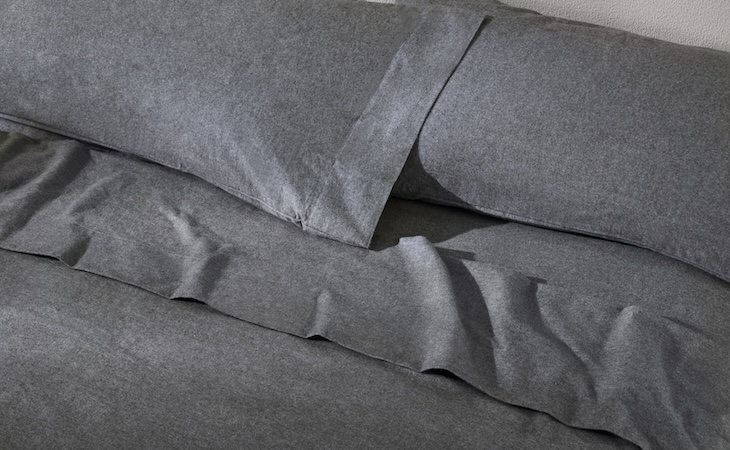
Flannel, on the other hand, is a natural woven fabric. It is soft and breathable. It’s also moisture-absorbent, so if you get too warm, flannel helps wick away sweat and keeps you from feeling stifled or sticky.
Ultimately, both fleece and flannel are cozy and warm, but fleece may be warmer, while flannel may feel more comfortable against the skin.
Breathability: why flannel prevents night sweats
As we’ve mentioned already, flannel’s natural fibers are more breathable than fleece’s synthetic ones. This subtle difference can be a game-changer if you’re prone to night sweats or hot flashes.
Thin flannel sheets or sleepwear can help prevent night sweats because the fabric keeps you warm without overheating. Whether made of wool or cotton, flannel is breathable. If your skin starts to sweat, the sweat can evaporate so your skin doesn’t become damp and slick.
Importantly, flannel sheets will not prevent hormone-triggered hot flashes or fever-induced night sweats. Flannel might feel more comfortable than fleece if you sweat due to hormones or a medical condition, but it won’t stop the sweating.
Durability, pilling, and maintenance rules
Both fleece and flannel are durable fabrics that can last a long time with proper care.
Unfortunately, both are prone to pilling, though “pills” are much more likely with polyester fleece than a high-quality cotton or wool flannel. Fabric “pills” are the tiny nubs or balls of tangled lint that form (and then cling) on the surface of fabric.
The very quality that makes fleece and flannel soft can also make them pill. That’s especially true of fleece. The looser and plusher a fabric’s weave, the more likely the surface fibers are to loosen and tangle into fuzz balls when any amount of friction is applied. That’s why soft sweaters often start to pill under the upper arms, where the fabric of the sleeve is constantly rubbing against the main body fabric.
The main durability concern with flannel is that cotton and wool tend to shrink. These natural materials are very absorbent, and when the fibers absorb hot water in particular, they squeeze together, shrinking the blanket’s overall dimensions.
Fortunately, properly maintaining your fleece and flannel sheets, blankets, or clothing can help minimize pilling and increase the odds of the fabric lasting for a very long time.
Tips to care for fleece
How you wash and dry fleece can make a big difference in its softness and longevity.
For washing
- Wash alone or with soft items—no zippers or buttons, which can snag and cause pills.
- If possible, put the fleece item(s) in a mesh bag to reduce friction during the wash cycle.
- Set your washing machine to the “gentle” or “delicate” cycle.
- Use a minimal amount of mild detergent to prevent soap buildup.
- Wash with cold water (or warm, if the fleece has developed an odor or mustiness).
- Avoid fabric softener, which can leave a waxy residue.
For drying
- Whenever possible, hang or lay flat to air-dry.
- If you need a dryer, use the lowest heat setting.
General care tips
- Use a fabric shaver, soft toothbrush, or pill remover comb as soon as you notice new pills.
- Do not remove pills by hand, as tugging at the balled lint can make it worse.
- Avoid using bleach or stain remover on fleece.
Tips to care for flannel
Flannel is rugged and durable, often softening a bit over time. But it can also shrink and pill if you don’t care for it properly.
For washing
- Wash with cool or warm water, not hot.
- Use a consistent temperature throughout the wash cycle. Meaning, if the wash cycle is warm, make sure the rinse cycle is warm too.
- Set your washing machine to the “gentle” or “delicate” cycle, since excess agitation can cause pilling.
- Use a mild, color-safe detergent, especially for darker flannels.
- Avoid fabric softener, or occasionally wash with a cup of white vinegar to dissolve and strip away residue.
For drying
- Whenever possible, hang to air-dry.
- If you need a dryer, use the lowest heat setting and don’t over-dry.
General care tips
- Use a fabric shaver, soft toothbrush, or pill remover comb as soon as you notice new pills.
- Do not remove pills by hand, as tugging at the balled lint can make it worse.
- Store folded in a dry place.
Which fabric should you choose for winter bedding?
If you tend to run hot or get sweaty at night, choose flannel over fleece for winter bedding. But consider fleece if you tend to get cold at night—or want cozy bedding at a lower cost.
Ultimately, only you know which bedding type feels most comfortable for your body and your wallet. And if you’re feeling overwhelmed by the variety of winter bedding on the market, there’s nothing wrong with simply adding an extra layer to your summer bedding instead of transforming the entire setup.
As you consider the pros and cons of new winter bedding, it may help to know that your choice of pajamas can affect your sleep more than your bedding.
Research suggests that the warmth of sleepwear has a greater effect on your sleep quality than the warmth of bedding. In one study, people wearing wool pajamas fell asleep significantly faster than those wearing cotton pajamas. The study also compared wool versus polyester bedding and found no difference in sleep onset or quality.
Bottom line: Warm winter bedding can support sleep quality, but it’s not the only factor at play. Healthy sleep habits like reducing evening blue light exposure, creating a calm sleep environment, and cutting back on caffeine and alcohol can also go a long way toward improving your Z’s on long winter nights.
FAQ
Is fleece or flannel warmer for winter bedding?
Fleece bedding may be warmer than flannel, though flannel’s warmth can vary with fabric thickness.
Which is more breathable: fleece or flannel?
Flannel is more breathable than fleece when it is made from natural fibers such as cotton or wool. Most fleece garments and blankets are made of synthetic polyester, which isn’t breathable or moisture-wicking.
Does fleece or flannel pill more over time?
Both fleece and flannel can pill, so it depends on the fabric’s quality. Low-cost polyester fleece is most likely to pill, and very tightly woven flannel is least likely to pill.

Leandra Beabout
Leandra Beabout is a freelance health and travel writer based between Indiana and India. Her work has been published in Reader’s Digest, Greatist, The Guardian, CNN Travel, Lonely Planet, and more. She was previously an English teacher and daily newspaper reporter.
Related Stories
-
Mattress Protector Sizes and Dimensions (With Chart)
-
 Comforter Sizes and Dimensions (With Chart)
-
 Duvet Cover Sizes and Dimensions (With Chart)
Table of Contents
