
 Can You Wash Sheets With Powder Detergent?
Key Takeaways:
- Enzyme cleaners act as specialized “molecular scissors” using targeted catalysts: proteases break down blood, sweat, and bodily fluids; lipases dissolve body oils and sebum; and amylases lift starchy food spills.
- These cleaners are most effective when matched to the specific organic stain, but they will not remove chemical or mineral damage like rust, ink, dye transfer, or bleach spots.
- Avoid using enzyme cleaners on protein-based fibers like silk, wool, cashmere, and down feathers, as the enzymes can degrade and weaken the delicate natural fibers themselves.
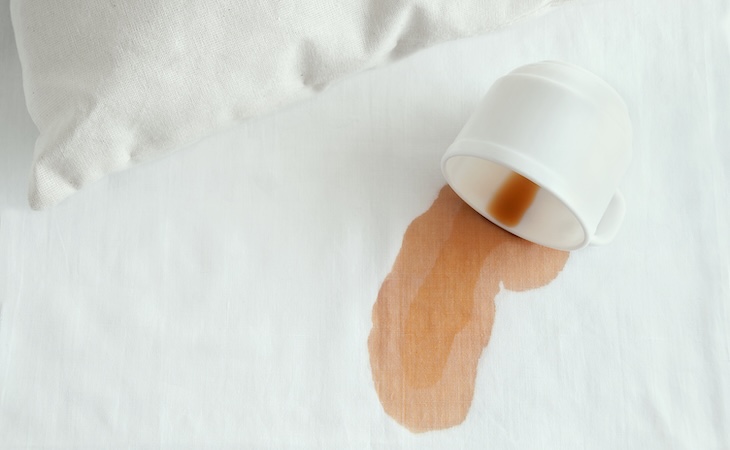
Let’s face it—sometimes some pretty nasty stains end up on our sheets. If your regular laundry detergent isn’t cutting it, maybe it’s time to try out something stronger.
That’s where enzyme laundry cleaners enter the picture. Enzyme cleaners have a very specific ingredient (you guessed it, enzymes) that works to break down tough stains and odors.
There are many household chores I don’t love doing, but laundry is at the top of my list. Discovering the existence of enzyme laundry cleaners may just change my tune.
I spoke with Sofia Martinez, a cleaning expert and owner of Sparkly Maid Austin, to find out more about whether enzyme laundry cleaners are worth adding to your cleaning routine.
What are enzyme laundry cleaners?
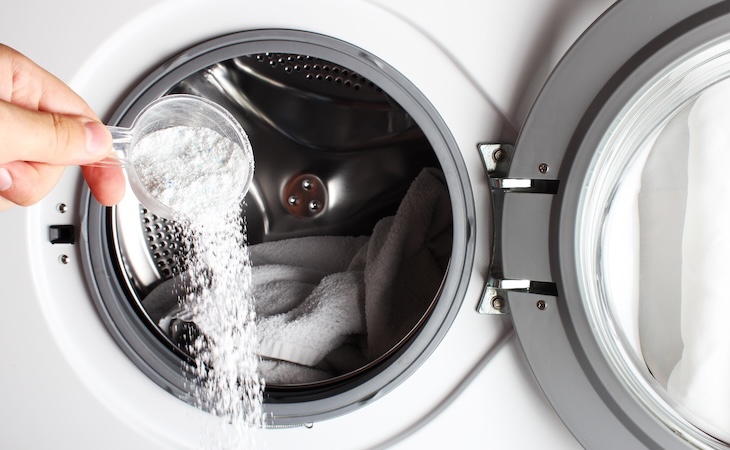
Let’s start by breaking down what enzyme laundry cleaners actually are. They can be detergents, stain removers, or boosters, which all contain enzymes that target particular types of soil.
“Enzymes act as catalysts, helping break large stain molecules into smaller pieces that water and surfactants can remove more easily,” explains Martinez.
There are multiple kinds of enzymes that can be included in these cleaners, and each one targets different organic soils. Here are the basics:
- Protease: For protein-based stains like blood, sweat, grass, baby formula, or eggs.
- Lipase: For fats, oils, and body sebum. Martinez notes that she still blots or scrapes oil out first before using an enzyme-based cleaner since “enzymes work better when they are not expected to penetrate a thick layer of grease.”
- Amylase: For starches, carbohydrates, pasta, and baby food.
- Cellulase: For dirt or soot in cotton fibers or to smooth out fabric fuzz.
- Mannanase and Pectinase: For complex food thickeners, chocolate, tomato sauce, and residue from fruit or vegetables
How enzymes break down tough stains
Martinez explains that this varies depending on the type of enzyme and the type of stain. Basically, though, the enzymes work like molecular scissors that break down larger stain molecules into water-soluble elements that you can rinse out more easily. The enzyme binds to the stain and creates a chemical reaction, and voilà! Away goes the stain, thanks to water lifting it out of the fabric.
Protein stains
“Proteases target protein-based residue such as blood, sweat, milk, egg, and some bodily fluids,” Martinez says. She adds that they “break large proteins into smaller fragments that can be lifted from the fabric.”
If you’ve noticed blood on your sheets, don’t worry—Martinez says a protease-based enzyme laundry cleaner can help with that.
She recommends using cold water, since heat can make a protein stain tougher to remove, and wait to put your item in the dryer.
“I avoid putting the item in the dryer until the stain is gone because drying can make remaining discoloration harder to treat,” she says.
Oil and fat stains
“Lipases target fats and oils by breaking them into smaller components that detergent surfactants can carry away,” says Martinez.
She adds that this type of enzyme cleaner can help with body oils, greasy food, cosmetics, and oily residue around collars, sheets, and pillowcases.
Starch and food stains
Eating in bed may seem like a good idea at the time, but then you drop your food onto your sheets or comforter and all bets are off. Enter an amylase-based enzyme cleaner.
“Amylases target starches found in foods such as pasta, rice, potatoes, sauces, and some baby foods,” says Martinez. “Breaking down the starchy component helps detergent reach and remove the rest of the stain.”
Do enzyme cleaners really work better than regular detergent?
The short answer? Maybe.
“They can work better when the stain matches the enzyme and the comparison detergent does not contain that enzyme,” says Martinez. But she cautions against hoping for them to remove stains like rust, dye transfer, ink, or plant-based stains. “Enzymes are also only one part of the cleaning process,” she says.
Additionally, Martinez says the phrase “regular detergent” is misleading because a lot of everyday detergents actually already have enzymes in their formulas.
In fact, adding an enzyme booster to an enzyme-rich detergent could make things worse. “It may not produce a meaningful improvement and could lead to unnecessary product use,” she says.
How to use enzyme cleaners for best results
Wondering how to use an enzyme laundry cleaner? Martinez built out a 10-step routine for you to follow.
- Check the garment care label and the cleaner’s directions.
- Identify the likely stain so the product contains the appropriate enzyme.
- Remove excess solids or blot excess liquid before treatment.
- Treat the stain promptly.
- Apply or soak only as directed, and do not let a pretreatment dry on the fabric unless the label permits it.
- Give the enzymes the recommended contact time. Immediately rinsing the product away may prevent it from working effectively.
- Use the listed water-temperature range rather than assuming hotter is better.
- Measure accurately and avoid overcrowding the washer.
- Inspect the garment before machine drying.
- Repeat a label-approved treatment rather than immediately escalating to harsher chemicals.
When not to use enzyme detergents
While enzyme detergents can be helpful for removing stains, there are still instances when you want to leave them by the wayside (and out of the washing machine). Martinez says to avoid using them on wool, silk, cashmere, feathers, and other protein-based fibers “unless both the garment and product labels specifically say the formula is safe.”
Martinez also recommends avoiding using enzyme cleaners with leather, suede, embellished textiles, vintage fabrics, unstable dyes, or items labeled dry clean only. “These materials require their own care methods,” she says.
Finally, refrain from using enzyme laundry cleaners if the stain just won’t work with an enzyme cleaner. “Enzymes are not solutions for rust, bleach damage, dye loss, or heat damage,” Martinez says.
Invest in new sheets from Saatva
This carousel automatically rotates through products. Use the pause button to stop rotation, or use the slide dots to navigate.

Organic Sateen Sheet Set
Shop Now
It’s easy to see why our flagship organic cotton sheet is a bestseller. Its silky-soft, 300 thread count sateen weave is made with 100% certified organic cotton. It’s better for the planet and feels indulgently luxurious on you.
Percale Sheet Set
Shop Now
Pamper yourself in deluxe comfort with our breathable percale sheets. They’re made from the world’s best long-staple cotton that gets softer and better with every wash.

Essential Sheet Set
Shop Now
This upgraded staple is woven from percale cotton and viscose to create an extremely soft, lightweight, and breathable sheet that gets softer with every wash.

Embroidered Sateen Sheet Set
Shop Now
Wrap yourself in the five-star luxury of our elegantly trimmed organic cotton sheets in a silky-soft, 300 thread count sateen weave that gets softer with every wash.

Signature Sateen Sheet Set
Shop Now
Wrap yourself in the five-star luxury of our signature cotton sheets in a silky-soft sateen weave that gets softer with every wash.

Banded Percale Sheet Set
Shop Now
Indulge in five-star hotel luxury right in your own bedroom with our banded percale sheets. They’re made from breathable long-staple cotton that gets softer and better with every wash.
FAQs
Are enzyme detergents safe for sensitive skin?
“Many people use enzyme detergents without a problem, but no detergent is guaranteed to suit every person with sensitive skin,” Martinez says.
She recommends choosing fragrance- and dye-free formulas, measuring them carefully, avoiding overloaded washers, and making sure your laundry rinses completely.
“Using more detergent than necessary increases the chance that residue will remain in the fabric,” she explains.
If you suffer from allergies, eczema, or known sensitivities, Martinez suggests testing out an enzyme detergent on a small number of garments first.
Does hot water ruin enzyme laundry cleaners?
Without putting too fine a point on it, yes. While not all enzymes will stop working once the water gets hot, some will.
“Excessive heat can reduce enzyme activity because enzymes are proteins whose structure can change at high temperatures,” says Martinez.
To avoid this issue, Martinez recommends following your detergent label and garment care instructions.
“Hotter is not automatically cleaner,” she says. “Warm water may improve dissolution and help with some oily soils, while cool water may be more appropriate for blood, dark colors, or heat-sensitive fabrics.”
How can you tell if your laundry detergent has enzymes?
Martinez suggests checking the package’s ingredients or the manufacturer’s website, noting that the label may simply say “enzymes,” or may be more specific about the type of enzyme included.
“Words ending in ‘ase’ frequently identify enzymes, but consumers should not rely on that pattern,” she cautions, adding that formulas can change.
“If the package does not provide enough detail, I contact the manufacturer and ask whether the current formula contains enzymes, and whether it is suitable for the fabric or sensitivity in question,” she says.
Time for new sheets? Here’s what Saatva offers
Are your sheets past their prime? If you notice stains that won’t wash out, yellowing, or discoloration, it’s time to replace your sheets.
We offer a wide range of bedding to suit every preference, including organic sateen sheets and percale sheets. Check out our full selection of sheets to find your perfect match.

Jamie Sanders
Jamie Sanders is an LA-based copywriter and blogger with 20+ years of experience in fashion, beauty, and lifestyle. After 12 years in New York City and a brief stint in Pittsburgh, she (finally) relocated to Los Angeles in 2015. Her work has appeared in InStyle, Harper’s Bazaar, Shape, Allure, TODAY.com, and Glamour, among others. She also started her own blog, The Beauty of Life, in January 2007. Over the years, she’s cultivated her obsessions of bold nail polish, candles, Bonne Bell Lip Smackers, Minnie ears, and strappy-heeled sandals. When Jamie isn’t working, you can most likely find her exploring the Los Angeles bar and restaurant scene, traveling, or enjoying time at Disneyland.
Related Stories
-
Can You Wash Sheets With Powder Detergent?
-
 Why Do My Pillows Turn Yellow?
-
 What Is a Bolster Pillow?
Table of Contents
