
 How Sleep Affects Dopamine
Sleep Health, Mattress Types & Sizes, Mattresses, Sleep Tips
October 17, 2019, updated on October 7, 2026
How to Choose a Latex Mattress for Stomach Sleepers
Written by Christina Heiser

Key Takeaways:
- Firm, supportive latex mattresses are best for stomach sleepers. Latex mattresses help maintain neutral spinal alignment and prevent the hips and abdomen from sinking too deeply.
- Look for natural latex and zoned lumbar support. Natural latex offers durable support, while firmer support through the mattress’s center can help keep the lower back properly aligned.
- Temperature regulation matters. Latex is naturally breathable, but stomach sleepers who tend to sleep hot should also consider a mattress with a breathable cover, such as organic cotton.
A latex mattress can be a strong fit for stomach sleepers because latex is responsive and resists deep sinkage. Look for a medium-firm to firm feel that keeps the hips from dropping below the shoulders, plus enough surface cushioning to prevent pressure at the chest and pelvis. The right choice depends on body weight and comfort preference, so prioritize neutral spinal alignment over choosing the firmest mattress available.
Stomach sleeping has its pros and cons. For instance, it can help curb snoring—but if you’re one of the 7% of Americans who sleeps on their stomach, then you likely know that it can also leave you with a sore back in the morning. That’s why it’s especially important for stomach sleepers to choose a mattress that works for this sleep position.
A latex mattress is a great option for stomach sleepers. Its natural buoyancy supports and lifts up the body, and it sleeps cool thanks to the material’s open-cell structure. It’s extremely eco-friendly to boot.
Keep in mind that the ideal mattress for a stomach sleeper will be different from the one that’s best suited for side or back sleepers. Here’s what to look for in a latex mattress if you’re a stomach sleeper.
How to find the best latex mattress for stomach sleepers
The key to comfort for stomach sleepers—for any sleepers, really—is neutral spinal alignment. Because most people carry their weight across the hips and belly, sleeping on one’s stomach can cause an unnatural bowing of the spine, which in turn can lead to back pain. To assure proper lumbar support and overall comfort as a stomach sleeper, look for the following features in a latex mattress:
- Natural latex support core: The shorter the lifespan of a mattress, the sooner it will begin to sag—and that’s not good for stomach sleepers, who need a lot of spinal support. The best-quality latex is natural (vs. synthetic).
- Firm comfort level: Stomach sleepers do best on a firm surface. This allows your body to maintain the best possible alignment while you’re lying face down. If a latex mattress is too soft, your stomach will pull your spine down into an exaggerated curve. Keep in mind that you don’t want an overly firm mattress, though, because this can put pressure on your ribs and stomach and cause aches and pains. Experts recommend a medium to firmer comfort level (around a 6-8 on the firmness scale) to adequately support a stomach sleeper’s body.
- Zoned lumbar support: Lumbar support is one of the most important features to look for in a latex mattress if you’re a stomach sleeper—this is especially true if you have back pain. Lumbar support will ensure your spine is kept in neutral alignment while you sleep. In a latex mattress, you will find added lumbar support in the form of “zones.” A zoned design features firmer latex in the center third of the mattress. (Learn how to protect your back while you sleep.)
- Something else to keep in mind: Latex mattresses are naturally cool, but because one of the biggest complaints among stomach sleepers is sleeping hot, you may also want to make sure any latex mattress you choose has a breathable cover. Organic cotton is a good material to look for in a mattress cover.
Our best latex mattresses for stomach sleepers
This carousel automatically rotates through products. Use the pause button to stop rotation, or use the slide dots to navigate.
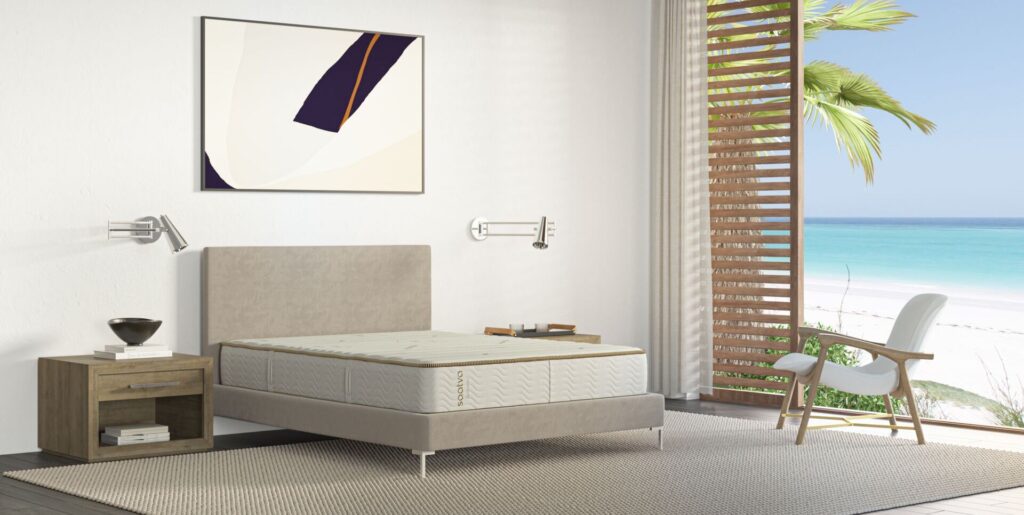
Zenhaven Latex Mattress
Shop Now
Natural latex responds to every curve for pressure-free support and responsive comfort. Natural latex is supple, resilient, and durable, for the ultimate in elevated sleep. (It’s naturally hypoallergenic too.)

Latex Hybrid Mattress
Shop Now
This hybrid mattress combines the pressure-free support of natural latex with the classic innerspring feel. Handcrafted with pure materials for the ultimate in cool and healthy sleep.
FAQs
Does body weight change the recommendation?
Yes. Body weight affects how deeply you sink into a mattress or pillow, so the same firmness or loft can feel different from person to person. Use general sleep-position guidance as a starting point, then adjust for body type and comfort.
How can I tell if my sleep setup is supportive enough?
Your head, neck, and spine should feel comfortably aligned without excessive pressure or deep sinkage. Persistent pain, numbness, or tingling should be evaluated by a healthcare professional rather than addressed only by changing bedding.
How to tell if your setup is wrong
Not sure whether your mattress and pillow are giving you the support you need? Watch for these signs:
- Your lower back feels sore in the morning: Your mattress may be too soft, allowing your hips to sink and putting your spine out of alignment.
- Your hips feel like they’re sinking into the mattress: This can indicate that you need a firmer, more supportive sleep surface.
- Your neck feels stiff or strained: Your pillow may be too thick or too firm, forcing your head upward while you sleep on your stomach.
- You wake up with numbness or pressure points: Excess pressure around your shoulders, hips, or ribs may mean your mattress isn’t distributing your weight properly.
- You frequently shift positions during the night: Restlessness can be a sign that your mattress isn’t providing the right balance of comfort and support.
- You feel better after sleeping somewhere else: If your back or neck consistently feels better after sleeping on a different mattress, your current setup may not be supporting your body correctly.
The goal:
When you sleep on your stomach, your spine should feel comfortably aligned without your hips sinking excessively or your neck being pushed upward. If you regularly wake up with pain or stiffness, consider adjusting your pillow height or choosing a firmer, more supportive mattress.
How to find the best pillow for stomach sleepers
Matching your pillow to your sleep position is important too. The National Sleep Foundation recommends using a thin pillow under your head—or no pillow at all. Placing a thin pillow under your stomach and pelvis may also help ward off back pain.
For more advice on finding the right latex bed for you, here’s how to choose the best latex mattress for your sleep position.

Christina Heiser
Christina Heiser is the content director at Saatva. She has held previous positions at Everyday Health, Women’s Health, and L’Oréal. Christina serves as an ambassador for the nonprofit organization Beyond Celiac and is passionate about raising awareness about celiac disease. When she’s not working, you can find Christina traveling the world in search of the best gluten-free eats and trying out the latest beauty, fitness, and wellness trends. Check out her newsletter, Celiac Self-Care.
Related Stories
-
How Sleep Affects Dopamine
-
 What Do Sex Dreams Mean?
-
 Why Don’t I Dream?
Table of Contents
